Archives for February 2014

Navajo Hero Twins Story Part 5

Hero Twins Video Part 5

Navajo Language Lesson by Clayton Long

Learn why some monsters were allowed to live included Hunger, Poverty, Old Age, and Cold.


Hero Twins Presentation

From the book:  The Legend of the Navajo Hero Twins

by Don Mose, Jr.
Illustrated by Charles Yanito

Navajo Language Lesson links

Clayton Long – Instructor
Clayton Long YouTube Channel
Mana Academy
Navajo Language Lessons Page
Navajo Language Lessons YouTube Channel
Navajo People Language Page
Heritage Language Resource Center
Harold Carey Jr – Computer Teacher

Navajo Hero Twins Story Part 4

Hero Twins Video Part 4

Navajo Language Lesson by Clayton Long

Sun Bearer and the Twins kill the Giant Ye’iitsoh
The Horned Monster (Dèèlgèèd )killed with help from prairie dog
Flying Monster of Tsèbit ‘áí Shiprock Killed
Walking Rock Monster ( Tsè Naagáii) was killed

Hero Twins Presentation Pictures and text

From the book:  The Legend of the Navajo Hero Twins

by Don Mose, Jr.
Illustrated by Charles Yanito

Navajo Language Lesson links

Clayton Long – Instructor
Clayton Long YouTube Channel
Mana Academy
Navajo Language Lessons Page
Navajo Language Lessons YouTube Channel
Navajo People Language Page
Heritage Language Resource Center
Harold Carey Jr – Computer Teacher
Navajo Hero Twins Story Part 3

Hero Twins Video Part 3

Navajo Language Lesson by Clayton Long

Navajo Hero Twins Part 3 Presentation

From the book:  The Legend of the Navajo Hero Twins

by Don Mose, Jr.
Illustrated by Charles Yanito

Navajo Language Lesson links

Clayton Long – Instructor

Clayton Long YouTube Channel

Mana Academy

Navajo Language Lessons Page

Navajo Language Lessons YouTube Channel

Navajo People Language Page

Heritage Language Resource Center

Harold Carey Jr – Computer Teacher
Jake Livingston – Navajo-Zuni Silversmith

Jake Livingston Living History Video

This documentary film was researched, photographed, edited and produced by students of Winona State University (Winona, Minnesota) and Diné College (Tsaile, Arizona, Navajo Nation) during summer 2013. It contains stories Jake Livingston of Sanders, Arizona, told the students during several hours of interviews about his life.

This documentary film is archived at the Navajo Nation Museum, Navajo Nation Library, Winona State University Library, and Diné College Library, and will be archived at the Smithsonian Institution’s National Museum of the American Indian.

The film is part of the Navajo Oral History project, a multi-year collaboration between the Winona State University Mass Communication Department and Diné College – The official Tribal College of the Navajo Nation

Jake Livingston - Navajo-Zuni Silversmith

Photo by Tom Grier /Navajo Oral History Project.

Jake Livingston was born in 1945. He is of Navajo/Zuni descent, and grew up in Pine Haven New Mexico. He graduated from Window Rock High School and then joined the Marine Corp. in 1966.

He served in the Vietnam War and was wounded 3 times and spent 2 months in the hospital. After the war he served a  policeman before becoming a silversmith.

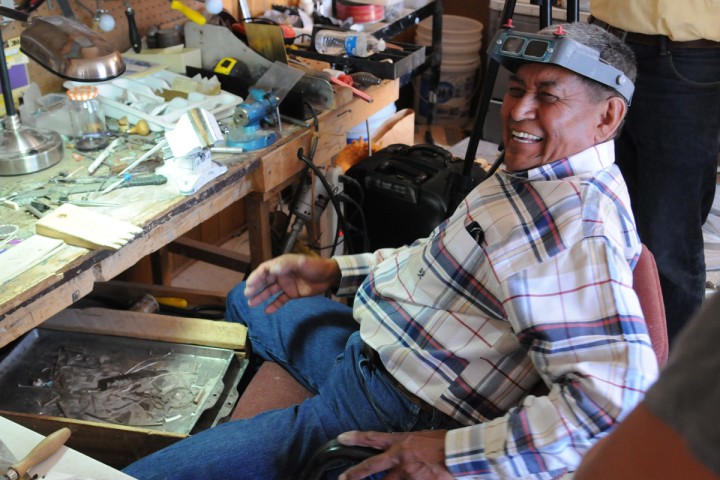
Jake Livingston in Workshop
Photo by Tom Grier /Navajo Oral History Project.

He learnt his skills from watching his father Jacob Haloo. Under his father’s tutelage and encouragement Jake became a master jeweler. He has been actively making jewelry since the early 1970’s and was named the Indian Arts & Crafts Association’s Artist of the Year in 1988. Jake Livingston draws inspiration from his Zuni Pueblo Heritage.

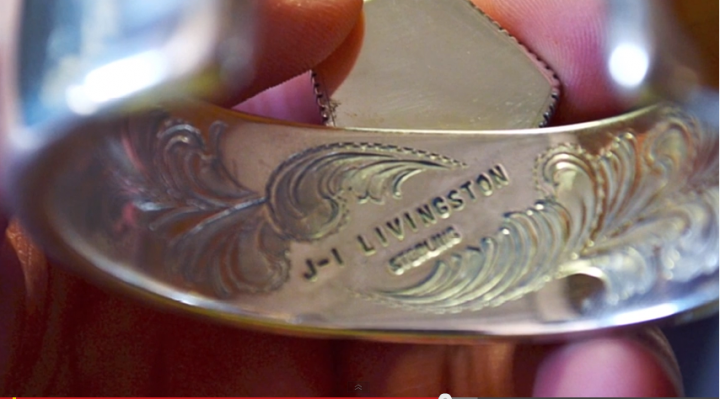
Jake Livingston stamp

His awards include numerous 1st place and Best of Division’s at the Santa Fe Indian Market. His work has been showcased in a number of books including the Jacka’s, Navajo Jewelry A Legacy of Silver and Stone.

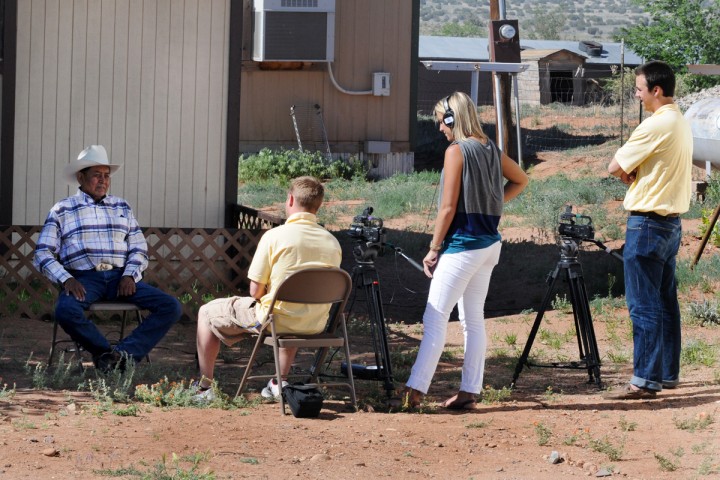
Jake Livingston Interview

 Photo by Tom Grier /Navajo Oral History Project.

Navajo Hero Twins Story Part 2

Hero Twins Video Part 2

Navajo Language Lesson by Clayton Long

Navajo Hero Twins Part 2 Practice Video

Navajo Hero Twins Part 2 Presentation

From the book:  The Legend of the Navajo Hero Twins

by Don Mose, Jr.
Illustrated by Charles Yanito

Navajo Language Lesson links

Clayton Long – Instructor

Clayton Long YouTube Channel

Mana Academy

Navajo Language Lessons Page

Navajo Language Lessons YouTube Channel

Navajo People Language Page

Heritage Language Resource Center

Harold Carey Jr – Computer Teacher

Peter MacDonald Tribal Chairman & Code Talker

Peter MacDonald  – Living History


This documentary film was researched, photographed, edited and produced by students of Winona State University (Winona, Minnesota) and Diné College (Tsaile, Arizona, Navajo Nation) during summer 2013. It contains stories Peter MacDonald, of Tuba City, Arizona, told the students during several hours of interviews about his life.

This documentary film is archived at the Navajo Nation MuseumNavajo Nation LibraryWinona State University Library, and Diné College Library, and will be archived at the Smithsonian Institution’s National Museum of the American Indian.

The film is part of the Navajo Oral History project, a multi-year collaboration between the Winona State University Mass Communication Department and Diné College – The official Tribal College of the Navajo Nation

Peter MacDonald PortraitPhoto by Tom Grier/Navajo Oral History Project.

Peter MacDonald was born in Arizona, U.S.A in may of 1928.
His clan is Hashk’aa ( Yucca Fruit) born to Bitahníí (They are within themselves).

He grew up in the Teec Nos Pos, Four corners area. He went to boarding school in Shiprock,NM and dropped out in the 6th grade because all the teachers were mean to the Navajos.
Raised among traditional sheepherders and trained as a medicine man for 1 year.

Peter MacDonald Code Talker

Photo by Tom Grier/Navajo Oral History Project.

MacDonald entered the Marine Corps as a Navajo language code talker during World War II.
After the war, MacDonald earned an electrical engineering degree at the University of Oklahoma. Upon graduation, his acumen secured a job with Howard Huges at the Hughes Aircraft Company,

He was first elected Navajo Tribal Chairman in 1970. MacDonald served as Navajo Nation Tribal Chairman for four terms between the years 1970 to 1986.

Peter MacDonald Tribal Chairman

Photo by Tom Grier/Navajo Oral History Project.

MacDonald is credited with starting the Navajo Nation Shopping Centers Enterprise, Navajo Engineering and Construction Authority, and many other Navajo-owned enterprises.

Navajo Hero Twins Story Part 1

Hero Twins Video Part 1

Navajo Language Lesson by Clayton Long

Ashiikè Naakií baa hashne’ dooleel.

Navajo Hero Twins Presentation Part 1

From the book:  The Legend of the Navajo Hero Twins

by Don Mose, Jr.
Illustrated by Charles Yanito

Navajo Language Lesson links

Clayton Long – Instructor

Clayton Long YouTube Channel

Mana Academy

Navajo Language Lessons Page

Navajo Language Lessons YouTube Channel

Navajo People Language Page

Heritage Language Resource Center

Harold Carey Jr – Computer Teacher

Navajo Language Lesson 4 Mountains

Video for Language Lesson 4 Mountains

Presenter Clayton Long

Diigo Dahodeeza baahashne’ dooleel.
Four directions I will talk about

Language Lesson 4 Mountains – Presentation

Diigo Dahodeeza baahashne’ dooleel.
Four directions I will talk about

Ha’ah aa jigo Sisnaajini sí’á
Towards the East Mount Blanca sits

Shádi’ááh jigo Tsoodzil si’á
Towards the South the Mount Taylor sits

E’e’aah jigo Dook’ooliid si’á
Towards the West the Mount Humphrey sits

Na´hookosjigo Dibe´ Nitsaa si’á
Towards the North the Mount Hesperus sits

Ahèhee’ Shik’èi
Thank You my People

Navajo Language Lesson links

Clayton Long – Instructor
Clayton Long YouTube Channel
Navajo Language Lessons Page
Navajo Language Lessons YouTube Channel
Navajo People Language Page
Heritage Language Resource Center
Harold Carey Jr – Computer Teacher

Della Toadlena Author, Professor, a Living History

Della Toadlena Living History Video


This documentary film was researched, photographed, edited and produced by students of Winona State University (Winona, Minnesota) and Diné College (Tsaile, Arizona, Navajo Nation) during summer 2013.

It contains stories Della Toadlena of Chinle, Arizona, told to the students during several hours of interviews about his life.

This documentary film is archived at the Navajo Nation Museum, Navajo Nation Library, Winona State University Library, and Diné College Library, and will be archived at the Smithsonian Institution’s National Museum of the American Indian.

The film is part of the Navajo Oral History project, a multi-year collaboration between the Winona State University Mass Communication Department and Diné College – The official Tribal College of the Navajo Nation


Della Toadlena was born in Canyon Del Muerto and grew up around the Black Rock area in northeastern Arizona.

Della began school at age five, going on six, at a Bureau of Indian Affairs boarding school. When she arrived at the dormitory, her parents learned their daughter had not been previously registered, and there was no more room, so she could not be admitted.

Della Toadlena Portrait

Besides, the school personnel said, She’s just five and won’t be six until October. We can’t take her; she’s underage. However, at the end of the day, another little girl who had been registered did not show up, and the school had to fill its quota, so it allowed the author to stay and go to school.

She went on to earn an AA and a BA in Elementary Education and an MA in English. Then the author joined the Humanities Division faculty at Dine College and taught English and Introduction to Native American Literature until she retired in May 2007.

Della Toadlena

Navajo Della Toadlena felt that her children didn’t know the history and origin of her
Navajo clan. It was this reason she decided towrite a book, “Our Story: Nihahane’”

The book begins with the history of Toadlena’s people and ends with her present-day life as a grandmother and retired college professor.
She wrote the book as a way of documenting her family’s history for her grandchildren and future generations.

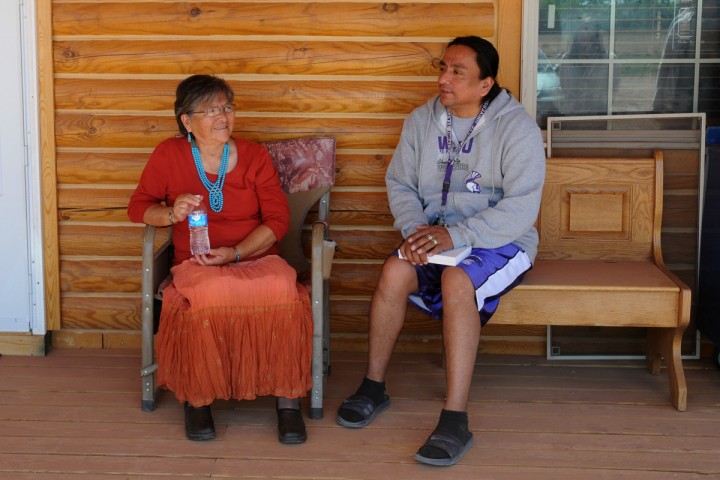
Della Toadlena-Front Porch

In “Our Story,” Toadlena describes where and how her traditional clan came about, and then shares her childhood growing up on the Navajo Reservation along with her educational experiences at the Bureau of Indian Affairs Mission Schools.

An excerpt from Della Toadlena book “Our Story”:
As a child I remember sitting up late at night with my sisters helping Grandma, Asdzaan Altsisi and our mother preparing food for the next day. Often it was roasting and grinding corn into meal for cornbread, pudding, dumpling or mush. Asdzaan Altsisi was our mother’s paternal grandmother. My mother was just three when her mother died, and this old lady took her under her wings and raised her. She was already a very old woman with white hair when we lived with her. Another time when there had been the butchering of a sheep, it was peeling the inside lining of the skin and running skewers of fat through it.
“I believe my book will appeal to young Native Americans who are constantly looking for people that will provide positive role models and help them see that they can become and accomplish whatever they set their minds to,” explains Toadlena.

Source: Amazon books Bio and Google books

Navajo Language Lesson Hogan 2

Navajo Hooghan (Hogan) Story Part 2

Hooghan baah naááhashne’ dooleel
I will speak about the hogan again.

By Clayton Long

Hogan Presentation Part 2

Navajo Language Lesson links

Clayton Long – Instructor

Clayton Long YouTube Channel

Mana Academy

Navajo Language Lessons Page

Navajo Language Lessons YouTube Channel

Navajo People Language Page

Heritage Language Resource Center

Harold Carey Jr – Computer Teacher