

Yá'át'ééh! Welcome to the Navajo Nation Travel Guide
The Navajo Nation includes approximately 27,000 square miles.It extends into the states of Utah, Arizona and New Mexico
The Navajo Reservation is home to many national monuments, and historical sites, and more than a dozen lakes and ponds,including Lake Powell alone has 186 miles of Navajoland shoreline.
They Navajo prefer to be called the Diné meaning “The People” or “Children of the Holy People”. Accordance with Diné (Navajo) custom, to welcome visitors from all over the world.
Experience the natural wonders of Monument Valley Tribal Park, Canyon de Chelly, Four Corners and other National Monuments. Also visit Hubbell Trading Post National Historic Site where customers have traded since 1878 and see their many Navajo rugs.
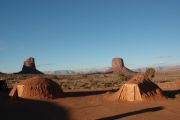 |
Monument Valley Tribal ParkMonument Valley (Navajo: Tsé Bii’ Ndzisgaii, meaning valley of the rocks) stretches across the state boundaries of northeast Arizona and southern Utah. |
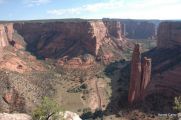
Canyon de Chelly National MonumentCanyon de Chelly (pronounced “dee shay”) was authorized in 1931 by President Herbert Hoover as a National Monument in large measure to preserve the important archeological resources that span more than 4,000 years of human occupation. |
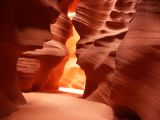 |
Antelope Canyon – Page ArizonaAntelope Canyon on the Navajo Nation near Page Arizona is the most-visited and most-photographed slot canyon in the American Southwest, mostly because it is easily accessible. |
Four Corners MonumentThe Four Corners Monument is the only place in the United States where four states (Arizona, Colorado, New Mexico, and Utah) come together at one place. |

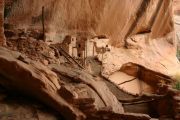 |
Keet Seel (“broken house” in Navajo)
|
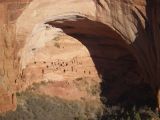
Betatakin Cliff Dwelling RuinsBetatakin, part of Navajo National Monument, occupies a large cave in the north wall of an unnamed south fork of Laguna Canyon,1 which latter empties into Tyende Creek at Marsh Pass. |
|
Inscription House RuinLocated in the Navajo Reservation, the three sites—Betatakin (Navajo: “Ledge House”), Keet Seel , and Inscription House—are among the best-preserved and most elaborate cliff dwellings known. |