Beulah Allen, Navajo Medical Doctor, First Miss Navajo

 Navajo Oral History project – Dr. Beulah Allen

Navajo Medical Doctor and the First Miss Navajo Nation
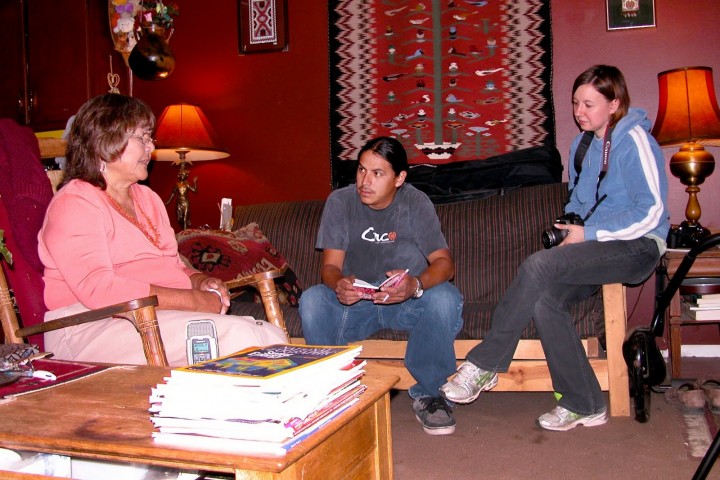
Beulah Allen, Navajo Medical Doctor, First Miss Navajo

Photo by Tom Grier/Navajo Oral History Project.

Beulah Allen, one of the first Navajo medical doctors, and the person who helped create the Emergency Medical Service providing ambulance and quick response medical care across the Navajo Nation.

She was the first Miss Navajo was Dr. Beulah Melvin Allen, in 1952. She was crowned at the Navajo Nation Fair, the largest fair held on the Navajo Nation, which had been established three years earlier.

Hometown: Kinlichee, Arizona
Education:
Rehoboth High School, 1989
B.S. in Accounting/Finance – University of Arizona

Clans:
She is Born to(Nishlí): Bitter Water People (Tódích’íi’nii)
Born for (Báshíshchíín): Red Running Into The Water People (Táchii’nii)
Maternal Grandparents are (Dashichei): Start Of The Red Streaked People (Deeshchii’nii)
Paternal Grandparents are (Dashinálí): One-Walk-Around People (Honágháahnii)

Miss Navajo 1952-DrBeulahMelvinAllenMD

Photo courtesy of Miss Navajo Council

This film contains stories Beulah Allen of Wheatfields, Arizona, told the students during several hours of interviews about her life.


This documentary film was researched, photographed, edited and produced by students of Winona State University (Winona, Minnesota) and Diné College (Tsaile, Arizona, Navajo Nation) during summer 2009.

It contains stories Harry Walters of Cove, Arizona, told the students during several hours of interviews about his life.

This documentary film is archived at the Navajo Nation MuseumNavajo Nation LibraryWinona State University Library, and Diné College Library, and will be archived at the Smithsonian Institution’s National Museum of the American Indian.

The film is part of the Navajo Oral History project, a multi-year collaboration between the Winona State UniversityMass Communication Department and Diné College– The official Tribal College of the Navajo Nation


Navajo People Website Links:

Navajo Culture – Navajo History – Navajo Art – Navajo Clothing Navajo Pictures – Navajo Rugs – Navajo Language– Navajo Jewelry – Navajo Code Talker – Navajo Pottery – Navajo Legends – Hogan’s – Sand Painting – Navajo Food – Navajo News – Navajo Nation
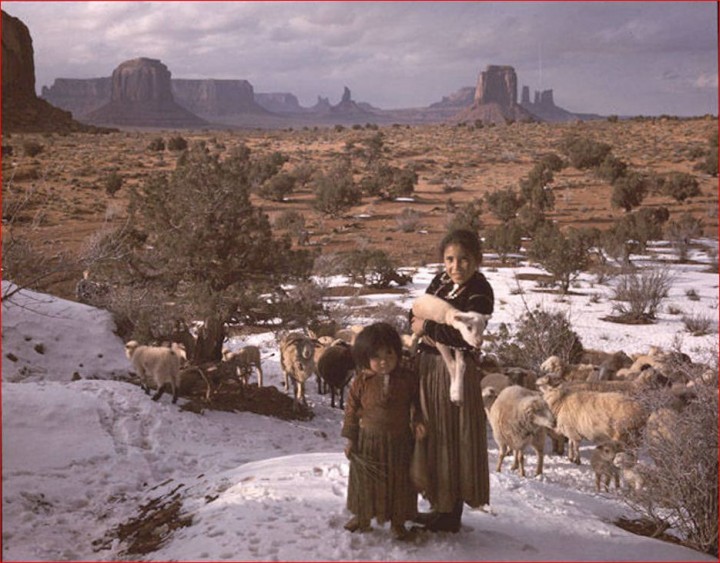
 

Navajo Shepherdess Girls in Winter

Navajo Shepherdess Girls in Winter

Title: Shepherdess in Winter. In Monument Valley, Arizona on the Navajo Indian Reservation, children tend the flocks whatever the weather. Here a young girl holds her pet lamb, and in the background loom the stone monuments for which the area is named. [photographer’s caption]

Date: 1950-1970
Creator: Muench, Josef
Photo’s courtesy of:  Northern Arizona University. Cline Library.
Subjects: Navajo Indians, Native Americans
Places: Monument Valley (Ariz. and Utah) Navajo Indian Reservation

New Navajo Photo Gallery


Navajo People Website Links:
Navajo Culture – Navajo History – Navajo Art – Navajo Clothing Navajo Pictures – Navajo Rugs – Navajo Language– Navajo Jewelry – Navajo Code Talker – Navajo Pottery – Navajo Legends – Hogan’s – Sand Painting – Navajo Food – Navajo News – Navajo Nation


Preparing food and distributing beef at the Squaw Dance

Preparing food and distributing beef at the Squaw Dance, Monument Valley, 1938-Charles Kelly.
Description:
Preparing food and distributing beef at the Squaw Dance 1938.

Location: Navajo Indian Reservation, Monument Valley
Photographer: Kelly, Charles
Date of photograph: 1938
Subject: Navajo Life, Food; Meat; Beef; Monument Valley; Navajo Indians; Dance
Photo courtesy of: Utah State Historical Society. All Rights Reserved.
Photo Number: No. 14463
Source donors: Kelly, Charles

More Navajo Photos


Navajo People Website Links:
Navajo Culture – Navajo History – Navajo Art – Navajo Clothing Navajo Pictures – Navajo Rugs – Navajo Language– Navajo Jewelry – Navajo Code Talker – Navajo Pottery – Navajo Legends – Hogan’s – Sand Painting – Navajo Food – Navajo News – Navajo Nation
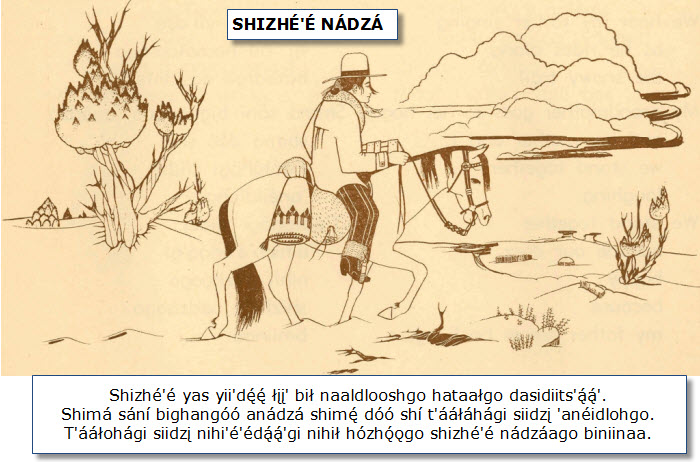
Father Comes Back – Navajo Language Lesson

Father Comes Back - Navajo Language Lesson


Father Comes Back
We hear my father singing as he rides along the snowy trail.
My grandmother goes to her hogan and my mother and 1, we stand together, laughing.
We stand together outside our door, happy because my father comes back again

Source : “Little Herder in the Winter” by Ann Clark 1940
Illustrated by:

Hoke Denetsosie
Linguistics by:
John P. Harrington
Robert W. Young

More Navajo Language Lessons


Navajo People Website Links:
Navajo Culture – Navajo History – Navajo Art – Navajo Clothing Navajo Pictures – Navajo Rugs – Navajo Language– Navajo Jewelry – Navajo Code Talker – Navajo Pottery – Navajo Legends – Hogan’s – Sand Painting – Navajo Food – Navajo News – Navajo Nation

Andrew Brady, Navajo Coal Miner, and Farmer

This film features Andrew Brady, an air force veteran, retired coal miner, and farmer from Shiprock, N. M.

Andrew Brady, Navajo Coal Miner, and Farmer 2010

Andrew Brady is a Navajo elder who lives and farms in Shiprock, New Mexico.

A veteran of the United States Air Force, Andy worked as a mining foreman for 30 years.


A devoted father and grandfather who is an inspiration to his family and others,

Andy has earned respect from community members for helping the Navajo people gain water rights to the San JuanRiver in New Mexico.

Andrew Brady, Navajo Coal Miner, and Farmer-2

Project completed by:
Altyn Burnside – DC
Ben Chambers – WSU
Shaina Nez – DC


This documentary film was researched, photographed, edited and produced by students of Winona State University (Winona, Minnesota) and Diné College (Tsaile, Arizona, Navajo Nation) during summer 2009.

It contains stories Harry Walters of Cove, Arizona, told the students during several hours of interviews about his life.

This documentary film is archived at the Navajo Nation MuseumNavajo Nation LibraryWinona State University Library, and Diné College Library, and will be archived at the Smithsonian Institution’s National Museum of the American Indian.

The film is part of the Navajo Oral History project, a multi-year collaboration between the Winona State UniversityMass Communication Department and Diné College– The official Tribal College of the Navajo Nation


Navajo People Website Links:

Navajo Culture – Navajo History – Navajo Art – Navajo Clothing Navajo Pictures – Navajo Rugs – Navajo Language– Navajo Jewelry – Navajo Code Talker – Navajo Pottery – Navajo Legends – Hogan’s – Sand Painting – Navajo Food – Navajo News – Navajo Nation


Betatakin, Arizona(Navajo Site) Video


Title: Betatakin, Arizona (Navajo site)
Creator: Fritz Lang
Subject: Motion picture
Description: 16 millimeter motion picture reel, filmed by Fritz Lang as he toured the Southwest of the United States, 1938-1953
Publisher: University of Wyoming. American Heritage Center
Date Original: 1938-circa 1940s
Time: 8 minutes, 16 seconds


Navajo People Website Links:
Navajo CultureNavajo HistoryNavajo ArtNavajo Clothing Navajo PicturesNavajo RugsNavajo LanguageNavajo JewelryNavajo Code TalkerNavajo PotteryNavajo LegendsHogan’sSand PaintingNavajo Food Navajo NewsNavajo Nation

Navajo Girl and Boy on Donkey 1930’s

Navajo Girl and Boy on Donkey 1930's

Photographer Davis, Glenn A.

Photo’s courtesy of: Utah State Historical Society
Subject: American Indians (Native Americans: Navajos)
Source donors: Kelly, Charles
Photo Number: No. 14446

More Photo Here


Navajo People Website Links:
Navajo Culture – Navajo History – Navajo Art – Navajo Clothing Navajo Pictures – Navajo Rugs – Navajo Language– Navajo Jewelry – Navajo Code Talker – Navajo Pottery – Navajo Legends – Hogan’s – Sand Painting – Navajo Food – Navajo News – Navajo Nation

Rainbow Lodge and Navajo Trading Post

The Rainbow Lodge and Navajo Trading Post were built in 1924 by S.I. Richardson and his son Cecil.

Rainbow Lodge and Navajo Trading Post

Photo of Rainbow Lodge and Navajo Trading Post 1950

A second post, a tent operation located near War God Springs, was operated on the other side of the mountain by Ben and Myri Wetherill.

The Richardson brothers came to the Southwest to escape the harsh life imposed on them by their fundamentalist father.

After working with relatives in the trading post business, the brothers took a pack trip from Kaibito to the bridge. It was this trip that inspired them to start a guide and trading post business on the southern slope of Navajo Mountain.

Their plan included construction of a road from Tonalea, Arizona to their new Rainbow Lodge and Trading Post at Willow Springs.

Hubert Richardson sold his interest in the lodge to Barry Goldwater, future Arizona Senator and presidential candidate.

World War II handicapped business at the lodge. Very little recreational travel took place during the war, and remote locations like Rainbow Lodge were hit the hardest. But Goldwater loved the country around Rainbow Bridge.

He had bought into the Richardson operation in the 1930s as a partner and in 1946, after the conclusion of the war, decided he wanted to have a go at running a successful tourist operation.

The lodge did little business during the war, with the Wilsons leaving Navajo Mountain for a brief time to secure employment elsewhere. The lodge was virtually unused for nearly five years.

With wartime fuel restrictions lifted by 1946, people began touring the Southwest again. Goldwater had guessed well regarding post-war tourism. In 1923, annual visitation to the bridge was only 142 people.

After 1945, visitation went up every year, reaching a high of 1,081 in 1955. Goldwater secured the promise of the Park Service to distribute Rainbow Lodge pamphlets to all persons inquiring about services at Rainbow Bridge.

In high hopes of success, Goldwater sent 1,500 pamphlets to the Park Service’s information office. Unfortunately the lodge burned to the ground in August 1951, leaving nothing but high hopes.

Navajo Shoe Game Tournament – Késhjéé’

 4th Annual – Késhjéé’ – Shoe Game Tournament


 Navajo Shoe Game Tournament.

New Year’s Eve

1st place – 5 Chainsaws
2nd place – 5 loads of firewood
3rd place – 10 Bales of 3-wire hay

Entry Information:
Team Registration open
8 Team Bracket
$75.00 before December 14, 2012
$100.00 after December 14, 2012
(non-refundable)

To Register a Team:
call Char Kruger at 928-810-8536 or char@navajonationmuseum.org

LIVE BROADCASTING – KTNN
FOOD CONCESSION
EVERY HOUR DOOR PRIZES
GRAND DOOR PRIZE CHAINSAW – MUST BE PRESENT TO WIN

Event is Free to the Public – Alcohol/Drug Free Event


Sponsoring the Navajo Shoe Game Tournament.


Navajoland Inn & Suites Hotel


Winter Special Rate

Navajo People Website Links:
Navajo Culture – Navajo History – Navajo Art – Navajo Clothing Navajo Pictures – Navajo Rugs – Navajo Language– Navajo Jewelry – Navajo Code Talker – Navajo Pottery – Navajo Legends – Hogan’s – Sand Painting – Navajo Food – Navajo News – Navajo Nation

Navajo Shoe Game Featured at Balloon Event

Navajo Shoe Game Featured at the  Third Annual Monument Valley Hot Air Balloon Event

Monument Valley Hot Air Balloon Event Navajo Shoe Game

Winter on the Navajo Nation is a time when healing through laughter begins.
In fact, it is also a time to listen and learn about the emergence of the Navajo people. Winter is when many traditional oral Navajo stories are told that embody the spirit and wisdom of various animals and birds. According to traditional Navajo elders, animals and birds played a very significant role in early Navajo history and still do today.
It is said that animals such as the coyote, bear and owl were put upon Mother Earth to educate, heal and provide guidance for the Navajo people. Navajo legend says that in early Navajo history, animals and birds communicated with each other.

And virtually every animal and bird has a purpose and role in traditional Navajo culture.
Traditional Navajo elders note that similar to human beings, the animals and birds in early Navajo history began to disagree with each other. One point of discussion was whether or not it should always be day or night. Hence, the animals and birds decided to play a game to determine which it would be. It is said that neither the day or night creatures won; therefore, we now have day and night.
Today, that game is still played during the winter season and is it called a traditional Navajo shoe game, which continues to have lot of spiritual significance. In fact, many of the Navajo shoe game songs that are sung today are the same songs that specific animals and birds sung during the original shoe game that was first held in the beginning of time.
Depending on what part of the reservation it is held, each Navajo shoe game may differ. However, laughter is a central part of all Navajo shoe games. Moreover, there are various traditional Navajo stories that talk about humor and how it helps to heal the sick.
The Navajo shoe game was initially called a moccasin game and held in conjunction with a specific ceremony such as a five-day Evil Way Ceremony. Over time, it has slowly changed through the years. Case in point, most people today use cowboy boots or shoes in place of moccasins. What continues is the use of a yucca ball and 102 yucca stems.
Navajo Nation Parks and Recreation Department Director Martin L. Begaye said, “We’re very excited that a traditional Navajo shoe game will be added to the Third Annual Monument Valley Balloon Event. This is a traditional Navajo social game that is very popular among the Navajo people especially our Navajo elders. It is very important that the Navajo Nation Parks and Recreation Department work closely with the Navajo people and receive their support and participation on such activities as this great annual event.”
The Third Annual Monument Valley Navajo Tribal Park Hot Air Balloon Event will be held on January 11-13, 2013 at Monument Valley.
Begay added, “This is the only hot air balloon event in the world that will include a traditional Navajo shoe game. The event will have a little bit of everything for people of all ages.”
Other events that are being held in conjunction with the annual hot air balloon event is an art and writing contest for the youth and an array of prizes that will be awarded. The deadline for the writing and art contest is December 14, 2013. The annual event will also feature 20 hot air balloon pilots from throughout the country and a hot air balloon night glow.
You can obtain additional information at www.navajonationparks.org

Media Contact: Roberta John
Senior Economic Development Specialist
Navajo Nation Parks & Recreation Department
(928) 871-6647
Email: bobbie@navajonationparks.org
Navajo People Website Links:
Navajo CultureNavajo HistoryNavajo ArtNavajo Clothing Navajo PicturesNavajo RugsNavajo LanguageNavajo JewelryNavajo Code TalkerNavajo PotteryNavajo LegendsHogan’sSand PaintingNavajo Food Navajo NewsNavajo Nation