Navajo Vocabulary Flashcards

Use these flashcards to learn the Navajo Language.

Navajo Vocabulary Flashcards

The basic set consists of 150 colorful, index-sized cards; Navajo text on one side and English reference on the opposite side. Basic vocabulary set includes the following categories: animals, food, plants, seasons, family, household items, shapes, numbers and more!

Cards are printed on heavy cardstock.

Illustrations by Theresa Breznau.

Basic Vocabulary set

Set of 150 cards
$10.00 on heavy cardstock
$20.00 Laminated

Ordering Information

San Juan School District
Heritage Language Resource Center
28 West 200 North
Phone: 435-678-1230
FAX: 435-678-1283
Store Hours: 9:00 – 4:30
Monday through Thursday
Email: rstoneman@sjsd.org

Online order at this Website: media.sjsd.org

We accept purchase orders, credit cards, and checks.
We bill only for items shipped and actual cost of shipping.
Personal orders ship after payment is received.
Please estimate 10% of purchase total for shipping cost.


Navajo Long Walk to Bosque Redondo

The procession from Fort defiance in Navajo land to Fort Sumner 300 miles away, began on March 6, 1864, with 2400 Navajos.

They had walked every mile of the way enduring the freezing temperatures hunger and other scornful jeers of the soldiers as well as death that accompanied them as they traveled.

Navajo Women and Men at Fort Defiance

Navajo Women and Men at Fort Defiance 1873 – National Archives

Every step they took send them for they traveled farther and farther away from their beautiful homeland. A homeland that was no longer theirs.
They cross the Rio Grande River on to unfamiliar surroundings where the mountains in the canyons in the beautiful rock formation like those they were accustomed to seeing in their country were nonexistent.

The Navajos were be willed or at this and it only made them feel the great loss of their beautiful homeland even deeper. During their journey to their cruel destination at Fort Sumner 197 Navajos lost their lives.

Indian captives at Issue House, Bosque Redondo Era, Fort Sumner, New Mexico-001

Indian captives at Issue House, Bosque Redondo Era, Fort Sumner, New Mexico

On March 20 of the same year 800 more Navajos began the same long journey to Fort Sumner, leaving their beloved homeland behind. Most of them women, old men and children suffered the severe snowstorms the freezing temperatures in the hunger.

On this and succeeding journeys many Navajos parodist of cold hunger and illness.

Eventually 8000 Navajos arrived and were captives at Fort Sumner.

 Counting Navajos at Bosque Redondo

Counting Navajos at Bosque Redondo

The US government had hoped that in a new home far from the enemies the Navajos could give up their belligerent ways and could begin a new way of life as farmers. The government also had high hopes of educating the Navajo people.

Few preliminary plans were made by the US government to initiate their goals. There was much disorganization and uncertainty in knowing what to do with the Navajos. Once they arrived at Fort Sumner.

Many unforeseen problems developed. There are not enough tents, blankets or food to go around. Many Navajos had to dig small holes in the ground and had to look for what ever materials they could find to build roof over a whole used as a protection.

The area around Fort Sumner was desolate dry and flat and it had little water or natural resources. Navajo men had to walk 12 to 15 miles just to find where they needed for cooking and heat. Drought, rodents and poor irrigation systems contributed to the loss of crop.

Although the government issued rations and other supplies these were not enough many Navajos were freezing and starving to death. After the short time the Navajos became weary, distraught and felt hopeless. They were sure evil spirits were causing their misfortune. Medicine men refused to hold ceremonies.

Maneulito family at Bosque Redondo,Fort Sumner

Maneulito family at Bosque Redondo,Fort Sumner

They felt that the gods of Navajo land were far were too far away to hear them. The Navajos were just living from one day to the next. Not sure of the future destination. They lived this way for several years suffering hardships and bad luck became their way. The US government also grew weary for their supplies were dwindling. There was little food, water and less wood for cooking and heat.

Initial goals for the Navajos had dissolved. Their only concern at this point was to keep the Navajos alive on the bare necessities. They could give them. The idea for relocating the Navajos proved to be a poor one. A resolution had to be made.

After months calculation he discussed it among the US officers at Fort Sumner, a decision was made. The Navajos would be sent to Oklahoma. Their water would and good farmland was plentiful.

When the Navajos for of the plan they were very angry. They did not want to be sent away again. They wanted to go back home. Home to their beautiful lands. Home to their sacred gods who they could watch over them.

The US government took the Navajos feelings into consideration. They knew that if they force the Navajos to relocate again it would only open doors to more problems. Navajos would remain on the reservation by force and not by choice.

Once again the US officers consulted and discussed how to resolve the matter. After some time they had made a decision. The Navajos would be sent to their native homeland only if they agreed to keep the peace with their neighbors and not to oppose the building of the railroad.

They would have to send their children ages 6 to 16 to schools. The Americans in return would give the Navajos back the land described in the treaty along with tools and see small cash payments and stock. They also promised to protect the novel holes from the white and Indian enemies.
Reluctant at first to promise to conform to the white man rules the Navajos eventually agreed.

Navajo Treaty Singers

Treaties were signed by all the Navajo leaders on June 1, 1868.

The Navajos began their long journey homeward. However unlike the first journey they made this time there was joy, hope, anticipation and excitement in their hearts for this time there were going home.

In mid-June, a 10 mile caravan rolled away from Fort Sumner. The summer walk was very much different from the winter marches for and a half years before.

By the time the joyful Navajos reads Fort defiance their native homeland was a desert with no signs of likelihood. Despite all the terrible hardships of the 300 mile removal and the hard life at Fort summer the Navajos had arrived. Their way of life their religion and the Navajo traditions had not changed much during therefore not half years stay at Fort Sumner.

This question of their way of life would be an issue in years to come. White Americans would use the treaty to force the novel to Navajo children into classrooms where they would be taught to live the white American way. The Navajos would resist the change. The Navajos did not gain a sense of unity from their experiences at Fort Sumner. The tribe now shared a few things in common; an ugly memory of a difficult time the joy of returning home and a deep belief that they should now keep what was their.

Source:  We Shall Remain: Utah Indian Curriculum Guide


Navajo Hero Twins Story Part 5

Hero Twins Video Part 5

Navajo Language Lesson by Clayton Long

Learn why some monsters were allowed to live included Hunger, Poverty, Old Age, and Cold.


Hero Twins Presentation

From the book:  The Legend of the Navajo Hero Twins

by Don Mose, Jr.
Illustrated by Charles Yanito

Navajo Language Lesson links

Clayton Long – Instructor
Clayton Long YouTube Channel
Mana Academy
Navajo Language Lessons Page
Navajo Language Lessons YouTube Channel
Navajo People Language Page
Heritage Language Resource Center
Harold Carey Jr – Computer Teacher

Navajo Hero Twins Story Part 4

Hero Twins Video Part 4

Navajo Language Lesson by Clayton Long

Sun Bearer and the Twins kill the Giant Ye’iitsoh
The Horned Monster (Dèèlgèèd )killed with help from prairie dog
Flying Monster of Tsèbit ‘áí Shiprock Killed
Walking Rock Monster ( Tsè Naagáii) was killed

Hero Twins Presentation Pictures and text

From the book:  The Legend of the Navajo Hero Twins

by Don Mose, Jr.
Illustrated by Charles Yanito

Navajo Language Lesson links

Clayton Long – Instructor
Clayton Long YouTube Channel
Mana Academy
Navajo Language Lessons Page
Navajo Language Lessons YouTube Channel
Navajo People Language Page
Heritage Language Resource Center
Harold Carey Jr – Computer Teacher

Navajo Hero Twins Story Part 3

Hero Twins Video Part 3

Navajo Language Lesson by Clayton Long

Navajo Hero Twins Part 3 Presentation

From the book:  The Legend of the Navajo Hero Twins

by Don Mose, Jr.
Illustrated by Charles Yanito

Navajo Language Lesson links

Clayton Long – Instructor

Clayton Long YouTube Channel

Mana Academy

Navajo Language Lessons Page

Navajo Language Lessons YouTube Channel

Navajo People Language Page

Heritage Language Resource Center

Harold Carey Jr – Computer Teacher

Jake Livingston – Navajo-Zuni Silversmith

Jake Livingston Living History Video

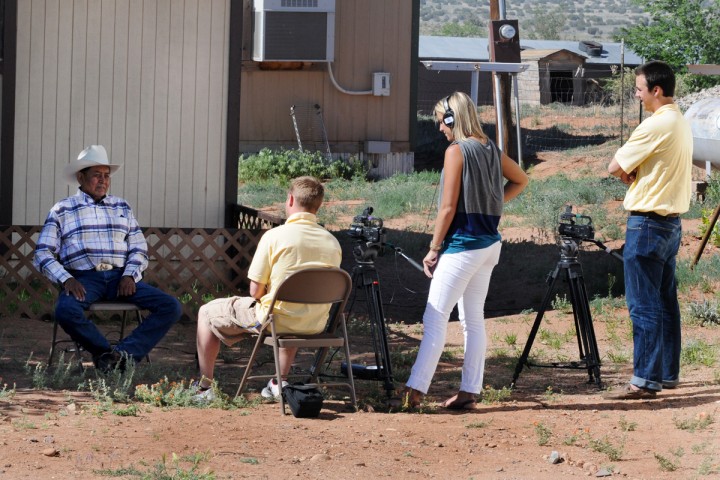
This documentary film was researched, photographed, edited and produced by students of Winona State University (Winona, Minnesota) and Diné College (Tsaile, Arizona, Navajo Nation) during summer 2013. It contains stories Jake Livingston of Sanders, Arizona, told the students during several hours of interviews about his life.

This documentary film is archived at the Navajo Nation Museum, Navajo Nation Library, Winona State University Library, and Diné College Library, and will be archived at the Smithsonian Institution’s National Museum of the American Indian.

The film is part of the Navajo Oral History project, a multi-year collaboration between the Winona State University Mass Communication Department and Diné College – The official Tribal College of the Navajo Nation

Jake Livingston - Navajo-Zuni Silversmith

Photo by Tom Grier /Navajo Oral History Project.

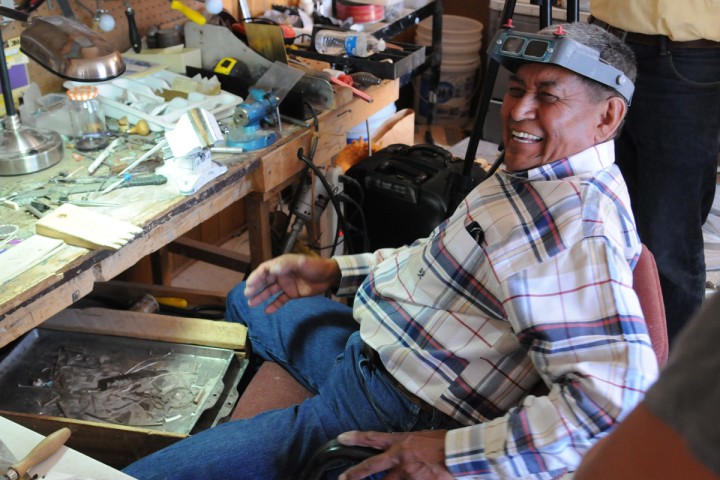
Jake Livingston was born in 1945. He is of Navajo/Zuni descent, and grew up in Pine Haven New Mexico. He graduated from Window Rock High School and then joined the Marine Corp. in 1966.

He served in the Vietnam War and was wounded 3 times and spent 2 months in the hospital. After the war he served a  policeman before becoming a silversmith.

Jake Livingston in Workshop
Photo by Tom Grier /Navajo Oral History Project.

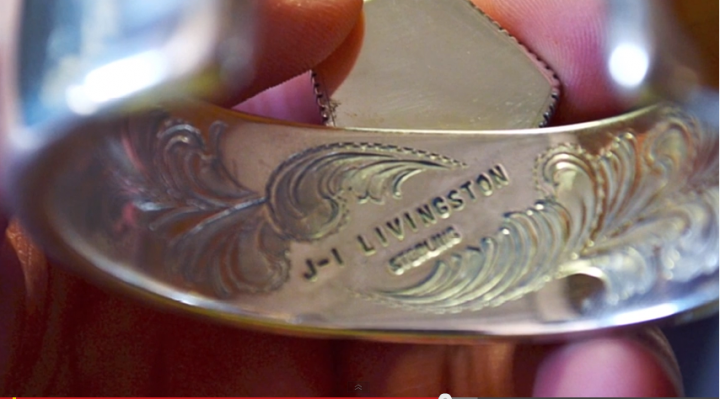
He learnt his skills from watching his father Jacob Haloo. Under his father’s tutelage and encouragement Jake became a master jeweler. He has been actively making jewelry since the early 1970’s and was named the Indian Arts & Crafts Association’s Artist of the Year in 1988. Jake Livingston draws inspiration from his Zuni Pueblo Heritage.

Jake Livingston stamp

His awards include numerous 1st place and Best of Division’s at the Santa Fe Indian Market. His work has been showcased in a number of books including the Jacka’s, Navajo Jewelry A Legacy of Silver and Stone.

Jake Livingston Interview

 Photo by Tom Grier /Navajo Oral History Project.

Navajo Hero Twins Story Part 2

Hero Twins Video Part 2

Navajo Language Lesson by Clayton Long

Navajo Hero Twins Part 2 Practice Video

Navajo Hero Twins Part 2 Presentation

From the book:  The Legend of the Navajo Hero Twins

by Don Mose, Jr.
Illustrated by Charles Yanito

Navajo Language Lesson links

Clayton Long – Instructor

Clayton Long YouTube Channel

Mana Academy

Navajo Language Lessons Page

Navajo Language Lessons YouTube Channel

Navajo People Language Page

Heritage Language Resource Center

Harold Carey Jr – Computer Teacher

Peter MacDonald Tribal Chairman & Code Talker

Peter MacDonald  – Living History


This documentary film was researched, photographed, edited and produced by students of Winona State University (Winona, Minnesota) and Diné College (Tsaile, Arizona, Navajo Nation) during summer 2013. It contains stories Peter MacDonald, of Tuba City, Arizona, told the students during several hours of interviews about his life.

This documentary film is archived at the Navajo Nation MuseumNavajo Nation LibraryWinona State University Library, and Diné College Library, and will be archived at the Smithsonian Institution’s National Museum of the American Indian.

The film is part of the Navajo Oral History project, a multi-year collaboration between the Winona State University Mass Communication Department and Diné College – The official Tribal College of the Navajo Nation

Peter MacDonald PortraitPhoto by Tom Grier/Navajo Oral History Project.

Peter MacDonald was born in Arizona, U.S.A in may of 1928.
His clan is Hashk’aa ( Yucca Fruit) born to Bitahníí (They are within themselves).

He grew up in the Teec Nos Pos, Four corners area. He went to boarding school in Shiprock,NM and dropped out in the 6th grade because all the teachers were mean to the Navajos.
Raised among traditional sheepherders and trained as a medicine man for 1 year.

Peter MacDonald Code Talker

Photo by Tom Grier/Navajo Oral History Project.

MacDonald entered the Marine Corps as a Navajo language code talker during World War II.
After the war, MacDonald earned an electrical engineering degree at the University of Oklahoma. Upon graduation, his acumen secured a job with Howard Huges at the Hughes Aircraft Company,

He was first elected Navajo Tribal Chairman in 1970. MacDonald served as Navajo Nation Tribal Chairman for four terms between the years 1970 to 1986.

Peter MacDonald Tribal Chairman

Photo by Tom Grier/Navajo Oral History Project.

MacDonald is credited with starting the Navajo Nation Shopping Centers Enterprise, Navajo Engineering and Construction Authority, and many other Navajo-owned enterprises.

Navajo Hero Twins Story Part 1

Hero Twins Video Part 1

Navajo Language Lesson by Clayton Long

Ashiikè Naakií baa hashne’ dooleel.

Navajo Hero Twins Presentation Part 1

From the book:  The Legend of the Navajo Hero Twins

by Don Mose, Jr.
Illustrated by Charles Yanito

Navajo Language Lesson links

Clayton Long – Instructor

Clayton Long YouTube Channel

Mana Academy

Navajo Language Lessons Page

Navajo Language Lessons YouTube Channel

Navajo People Language Page

Heritage Language Resource Center

Harold Carey Jr – Computer Teacher

Navajo Language Lesson 4 Mountains

Video for Language Lesson 4 Mountains

Presenter Clayton Long

Diigo Dahodeeza baahashne’ dooleel.
Four directions I will talk about

Language Lesson 4 Mountains – Presentation

Diigo Dahodeeza baahashne’ dooleel.
Four directions I will talk about

Ha’ah aa jigo Sisnaajini sí’á
Towards the East Mount Blanca sits

Shádi’ááh jigo Tsoodzil si’á
Towards the South the Mount Taylor sits

E’e’aah jigo Dook’ooliid si’á
Towards the West the Mount Humphrey sits

Na´hookosjigo Dibe´ Nitsaa si’á
Towards the North the Mount Hesperus sits

Ahèhee’ Shik’èi
Thank You my People

Navajo Language Lesson links

Clayton Long – Instructor
Clayton Long YouTube Channel
Navajo Language Lessons Page
Navajo Language Lessons YouTube Channel
Navajo People Language Page
Heritage Language Resource Center
Harold Carey Jr – Computer Teacher