Navajo Family in Canyon de Chelly, AZ 1920-1940

Navajo family in Canyon De Chelly, AZ. Date  1920-1940

Title: Navajo family in Canyon de Chelly, AZ
Subject: Navajo Indians; Chelly, Canyon de (Ariz.)
Description: Navajo family in Canyon de Chelly, AZ.
Publisher: Center for Southwest Research, University Libraries, University of New Mexico
Date Original: ca. 1920-1940

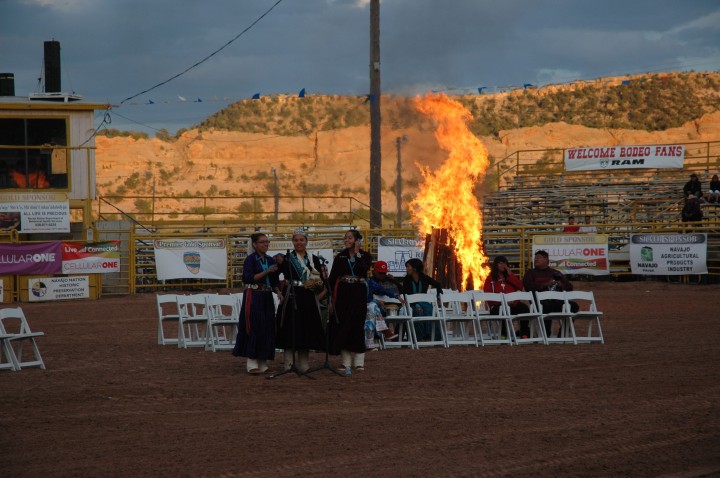
Inter-Tribal Night Performance- Navajo Fair Photos


Inter Tribal Night Performance Navajo Fair 1

Miss San Carlos Apache, Miss Northern Navajo Miss Apache Indian, and Jr Miss Mt. Turnbull

Laute  Mountain Apache Girl

Inter Tribal Night Performance Navajo Fair 2

Apache Dancers

Inter Tribal Night Performance Navajo Fair 3

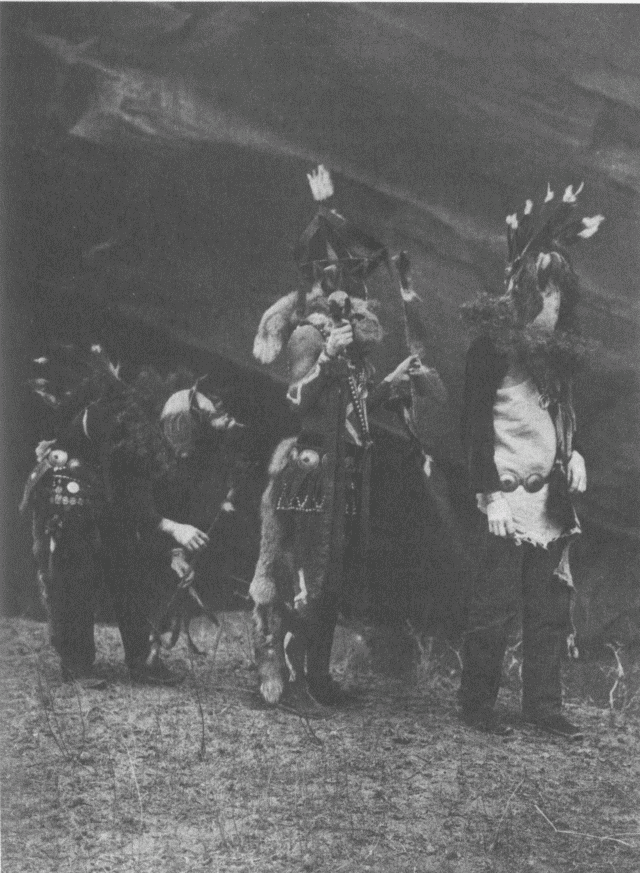
Yei Bi Chei (Yébîchai) Night Chant-First Day

A description of the ritual and form of the Yébîchai ceremony,—Kléjê Hatál, or Night Chant,—covering its nine days of performance, will give a comprehensive idea of all Navaho nine-day ceremonies, which combine both religious and medical observances. The myth characters personified in this rite are termed Yébîchai, Grandfather or Paternal Gods. Similar personifications appear in other ceremonies, but they figure less prominently

Note: The use of the word “Navaho”, and , “Navajo” are used in the writings about the Diné,  their history, and culture. See  this article: Use and spelling Navaho or Navajo

Each morning during the first four days of the Navaho Yébîchai healing ceremony, or Night Chant, the patient is sweated—sometimes inside a small sweat-lodge, oftener by being placed upon a spot previously heated by a fire and covered with heavy blankets.

Yei Bi Chei Sweat Lodge- Navaho

The three figures are medicine-men, or singers, chanting. The patient lies under the blankets surrounded by a line of sacred meal in which turkey-feather prayer-sticks, kadán, are implanted.

First Day:

The ceremonial, or medicine, hogán is built some days in advance of the rite. The first day’s ceremony is brief, with few participants. Well after dark the singer, assisted by two men, makes nine little splint hoops entwined with slip-cords, and places them on the sacred meal in the meal basket.

CIRCLE KETHAWNS.

These objects, called by the various but nearly synonymous names of Ye’b’tsai-tsa’pas, ye’ts-ida-V’lpas, ye’bapas and tsapasiazi-olia’l, are twelve in number. Each circle is made of a twig of ts’i’lts’ln or aromatic sumac two spans long.Navajo Kethawn

The ends are tied together by means of a yucca fiber exactly two spans long. The butt end of the fiber is applied to the. butt end of the twig, underneath it, and at first parallel to it, the fiber is’ then wound around the spliced extremities of the twig, so that its tip end shall approximate the tip end of the’ twig

Following this, three men remove their everyday clothing, take Yébîchai masks, and leave the hogán. These three masked figures are to represent the gods Haschéltî, Talking God, Haschbaád, Goddess, and Haschélapai, Gray God.

When they have gone and passed to the rear of the hogán, the patient comes in, disrobes at the left of the center, passes around the small fire burning near the entrance of the hogán, and takes his seat in the center, immediately after which the singing begins.

During the third song Hasché?lt? enters with his cross-sticks—Hasché?lt? balíl—and opens and places them over the patient’s body, forcing them down as far toward the ground as possible. The second time he places them not so far over the body; the third, not lower than the shoulders; the fourth time, over the head only, each time giving his peculiar call, Wu-hu-hu-hu-u!

Then Hasché?lt? takes up a shell with medicine and with it touches the patient’s feet, hands, chest, back, right shoulder, left shoulder, and top of head, this being the prescribed ceremonial order, uttering his cry at each placing of the medicine.

He next places the shell of medicine to the patient’s lips four times and goes out, after which Hasch?baád comes in, takes one of the circle k?dán, touches the patient’s body in the same ceremonial order, and finally the lips, at the same time giving the slip-cord a quick pull.

Next comes Hasché?lapai, who performs the same incantations with the k?dán. Again Hasché?lt? enters with the cross-sticks, repeating the former order, after which he gives the patient four swallows of medicine,—a potion different from that first given, the medicine-man himself drinking what remains in the shell. This closes the ceremony of the first day.

There will, perhaps, be considerable dancing outside the hogán, but that is merely practice for the public dance to be given on the ninth night. The singer and the patient sleep in the hogán each night until the nine days are passed, keeping the masks and medicine paraphernalia between them when they sleep.

SONGS OF THE EVENING

The songs sung on this evening, called Aga’hoa’gis-in or Summit Songs, are 26 in number; but not all are sung on this occasion; more of them are heard later during the nine-days’ ceremony. The whole set is sung on the third night. When there is no dance of the naakhai’ to be held on the last night, only three songs of the set -are repeated.

God of Harvest, Fringe Mouth, and Talking God

The personated deities pictured in this plate appear together in acts of succor in the Night Chant in the order seen, the Talking God in the lead. From left to right they are, respectively, the God of Harvest, Fringe Mouth, and Talking God.

Sources of Information for the Article:

The Night Chant, A Navaho Ceremony. By Washington Matthews – May, 1902.
Legend Of The Night Chant- The North American Indian By Edward S. Curtis 1907
The Nightway:A History and a History of Documentation of a Navajo Ceremonial by: James C. Faris – 1990.
Earth is My Mother, Sky is my Father, by Trudy Griffin-Pierce, 1992


Frank Begay Navajo Hoop Dancer

Frank Begay Navajo Hoop DancerFrank Begay a Navajo Hoop Dancer,  toured Yugoslavia and Italy during 1962 with the Duqesne University of Pittsburgh.
Source: Denver Public Library Digital Collections.


The Navajo Nation Zoo

The Navajo Nation Zoo and Botanical Park is the only Native American owned-and-operated Zoo in the Country.

Navajo Nation Zoo 1

Zoo Hours: 10 am – 4:30pm, Monday – Saturday, and most major holidays.

Admission is Free for everyone!

Navajo Nation Zoo

The Navajo Nation Zoo and Botanical Park offers a number of services to the Navajo People and visitors from all over the world. Nearly all of our products and services are free of charge too!

Free guided tours to school groups
Picnic areas for rental for your next event
Event Rental Of The Navajo Nation Zoo

The Animals at the Zoo
The Navajo Zoo has over 100 animals representing just over 50 species. All of these animals are on permanent display for our visitors’ enjoyment. As you notice from the links above, we have a great collection of common animals that are native to the Navajo Nation and Southwest U.S.


Coyotes Of The Navajo Nation ZooThe Navajo Zoo has two Coyotes, named Codee and Lucky Sophia. The Zoo acquired young Codee in May 2011 from Sanders, AZ, and Lucky Sophia came all the way from Mojave Valley, AZ in February 2012 to live at the Navajo Zoo.

Cougars Of The Navajo Nation Zoo
The Navajo Zoo has three Cougars on exhibit. The eldest is named Sophie and came to the Navajo Zoo in 1997 from Yuma, AZ. She is rather shy. Previously she shared her enclosure with a very friendly male named Napoleon, who died in 2008 after living at the Zoo for 18 years. In September 2011 we introduced two new older cubs to Sophie. One is a male that already weighs 90-100 pounds before his first birthday; the other is a female (photo above) that is half the size of Sophie. The new male was named Hunter and the female was named Kay-bah through the Zoo’s Adopt-an-Animal Program.

Use and spelling Navaho or Navajo

This is a response to many inquiries I have been receiving about word “Navaho” as used in articles on this website.

I have just came back from my trip to the Navajo Nation Museum and library doing research for my articles on this website.

I also visited Saint Michael’s Historical Museum near Window Rock, AZ where the Franciscan Fathers wrote ” An ethnologic dictionary of the Navaho language (1910).

Navajo Museum 1

Navajo Nation Museum – Photo by Harold Carey Jr.

Saint Michael’s Historical Museum

Saint Michael’s Historical Museum – Photo by Harold Carey Jr.

From Research on literature of the Southwest I have come up with the following:

Its origin is described in the “Ethnologic Dictionary of the Navaho Language”.

“The word Navaho, or originally, Navajo, is first mentioned and applied to this tribe of Indians by Fray Alonzo Benavides O. F. M., in his “Memorial to the King of Spain” written in 1630. After describing the Gila Apaches, Benavides says that more than fifty leagues north of these “one encounters the Province of the Apaches of Navajo.

Although they are the same Apache nation as the foregoing, they are subject and subordinate to another Chief Captain, and have a distinct mode of living. For those of back yonder did not use to plant, but sustained themselves by the chase; today we have broken land for them and taught them to plant.

But these of Navajo are very great farmers, for that is what Navajo signifies—great planted fields.”
1. Franciscan Fathers. Ethnologic Dictionary of the Navaho Language.

The Navahos call themselves: “Dine” which means men or people and in conversing with them they will tell you that “Dine” simply means “The People”.

The list below is from a search of works published by various authors interested in Southwestern archaeology and ethnology by writers using “ho” or “jo”.

NAVAHO
Hosteen Klah: Navaho Medicine Man and Sand Painter by Franc Johnson Newcomb (May 28, 2012)
The Enduring Navaho [Paperback]Laura Gilpin (Author) Publication Date: 1987
The Navaho by Clyde & lLighton, Dorothea Kluckhohn (1974)
Navaho Witchcraft by Clyde Kluckhohn (1995)
Navaho Indian Myths (Native American) by Aileen O’Bryan (Jun 14, 1993)
The Dine: Origin Myths of the Navaho Indians (Forgotten Books) by Aileen Warner O’Bryan (May 7, 2008)
Origin Myths of the Navaho Indians by Aileen O’Bryan; BAEB 163 [1956]
Navaho Myths, Prayers, and Songs by Washington Matthews; UCPAAE 5:2 [1906]

NAVAJO
Navajo Texts. by Pliny Earle Goddard (Jan 1, 1933)
Navajo Indians by Dane Coolidge and R. Mary (Jun 1930)
Navajo gambling songs – Matthews, Washington, 1843-1905
A study of Navajo symbolism (Volume v. 32 no. 3) – Newcomb, Franc Johnson
The Navajo and his blanket – Hollister, Uriah S., 1838-1929
The Navajo Indians; a statement of facts – Weber, Anselm, Father, 1862-1921
The making of a Navajo blanket – Pepper, George H. (George Hubbard), 1873-1924
The gentile system of the Navajo Indians – Matthews, Washington, 1843-1905

George Wharton James has an explanation for the use of NAVAHO and we quote the paragraph. “It will be observed that I follow the Americanized and rational form of spelling the name NAVAHO. Why people should consent to use the misleading and unnecessary form of the name NAVAJO, is beyond me.

Every stranger to the Spanish tongue—and there are millions who are thus strange—naturally pronounce this Na-va-joe, and cannot be blamed. Yet it does give the One-who-knows the opportunity to laugh at him, and perhaps this is the reason the Spanish form is retained.

Were the name one of Spanish origin we might be reconciled to that form of spelling, but as it is a name belonging to a tribe of Amerinds who were here and had been here for centuries when the Spaniards came, there is no reason why they should have fixed upon them forever a European method of spelling their name”.

2. James, George Wharton. “Indian Blankets and their Makers.” A. O. McClurg and Co., Chicago. 1920.

For justifying the use of Navaho in the Dictionary of the English Language and find in Funk and Wagnalls: “Navaho, an important and rapidly increasing branch of Athapascan Indians dwelling in New Mexico and Arizona; employed in herding blanket making, silver smithing, and as laborers in railroad and ether public works.
“Navajo” is the preference shown in Websters New International Dictionary.

A Navajo tour of Monument Valley (Video)

by TheGuardian
“Monument Valley in Utah is one of the most iconic natural wonders of the world, its vast sandstone buttes familiar from countless Westerns, but few visitors explore its cultural life. Here Navajo guide Larry Holiday talks about life on the reservation and the challenges families face, as well as the beauty of the landscape”

Baby Contest – Navajo National Fair 2012


Baby Contest - Navajo National Fair

Navajo National Fair –Baby Contest –


Navajo Baby Contest Winners List

0 to 6 months
FEMALE WINNERS:
1st Place – Rosina Effa Jones (1122 pts)
2nd Place – Kaydence Donna Lynch (990 pts)
3rd Place – Hailey R. Todacheenie (930 pts)
MALE WINNERS:
(no contestant entries)

7 to 12 months
FEMALE WINNERS:
1st Place – Eriah J. Kendall (1215 pts)
2nd Place – Adalyn Lily Yonnie (1189 pts)
3rd Place – Amaya Manuelito (1133 pts)

MALE WINNERS:
1st Place – Layondre Peterson (1180 pts)
2nd Place – Nicholas Cousens (1177 pts)
3rd Place – Brent Becenti Jr. (1094 pts)

13 to 24 months
FEMALE WINNERS:
1st Place – Hadley Taylor LittleElk (1260 pts)
2nd Place – Kayonbah Begay (1230 pts)
3rd Place – Noahana D. Halwood (1184 pts)
MALE WINNERS:
1st Place – Westlyne Begay (1184 pts)
2nd Place – DeMarcus Uentillie (1153 pts)
3rd Place – Uriah E. Kendall (1125 pts)

25 to 36 months
FEMALE WINNERS:
1st Place – Xemira Oliver (951 pts)
(no other contestant entries)
MALE WINNERS:
1st Place – Miles J. Roanhorse (1305 pts)
2nd Place – Jonah Lee Lawson (1224 pts)
3rd Place – Amir Woodie (1132 pts)

MOST PHOTOGENIC FEMALE
Kendall Rose Nelson (0 to 6 months)

MOST PHOTOGENIC MALE
Brent Becenti Jr. (7 to 12 months)

Guest Judges –
1. Early Childhood Development Counselor, Dr. Betty Sue King
2. Navajo Community Member, Thomasina Willie
3. First Things First Council Member, Grace Boyne
4. First Things First Arizona Director, Melissa Begay
5. Former Miss Navajo, Angela Barney Nez (1975-76)
6. Former Miss Navajo, Marilyn Help Hood (1977-78)

Submitted by Coordinator:
Sonlatsa Jim-Martin
(505) 567-0398

Fine Arts Competition! Over $50.000 in Awards

Fine Arts Competition

At the 66th Annual Navajo Nation Fair

Sponsored by Fire Rock Navajo Casino

September 3 – 9, 2012

Window Rock, Arizona 

Over $50.000 in Awards

Nozhoni Fine Arts Competition

AWARDS & CATEGORIES

2 Entries per Artist

Best of Show Award

President’s Choice Award

Vice-President’s Choice Award

Legendary Award

Horizon Award

ADULT DIVISIONS

Paintings, Drawings & Graphics Category

Jewelry Category

Basket Category

Pottery Category

Fiber Arts Category

Sculpture Category

Diverse Arts Category

Cultural Arts NEW Category

Photography NEW Category

Awards for:

1st Place

2nd Place

Honorable Mention

YOUTH DIVISIONS (12 to 17 years old)

Y-2D Category

Y-3D Category

Awards for:

1st Place

2nd Place

3rd Place

Honorable Mention

CHILDREN DIVISIONS (up to 11 years old)

Y-2D Category

Y-3D Category

Awards for:

1st Place

2nd Place

3rd Place

Honorable Mention

SENIOR DIVISIONS (65 & Older)

S-2D Category

S-3D Category

Awards for:

1st Place

2nd Place

Honorable Mention

Fine Arts Competition RULES & REGULATIONS

The FAC/NAM Committee will be accepting Art for Fine Art Competition on August 30th & 31st, 2012,  from 10:00 am to 4:00 pm at Gorman Hall on the Navajo Nation Fair grounds.

All work must be handmade by the artist within One Year Period of September 2012.  The art to be related to the artist’s tribal affiliation.

Eligibility & Tribal Verification
Artists are required to provide Certificate of Indian Blood (CIB) and Drivers License verification for age division.

Art Delivery
Each Artist Allowed Two Art Pieces for the Fine Arts Competition.  The artist to deliver art on August 30 & 31, from 10:00 am to 4:00 pm at Gorman Hall on the Navajo Nation fair grounds.  The Navajo Nation Museum staff will be available to accept entries.  NO entries will be accepted after 4:00 pm.

Best of Show Winner
A booth will be provided for the winner of Best of Show.  The artist will need to be present at the booth that should to remain open Friday, Saturday and Sunday from 10:00 am. to 8:00 pm. & on Sunday from 10:00 am to 5:00 pm.

Nizhoni Arts Market Booths
Artists who have NAM booth will have their art returned after judging to display & sell at their booth.  However, top winners art work will remain on display in the Fine Art Competition Gallery.

Consignment Fee
Consignment art sale fee15% for art sold at the NNFAC to made payable to NNF FAC.

Premium Prize Awards
Premium payouts by FAC Coordinator to be made on the following days: Thursday, Friday & Saturday from 2pm – 4pm.  Prize awards not claimed will be forfeited by 5 pm on September 14, 2012.

Artist Portrait & Photographs of Art
Artists and art will be photographed for winning categories. The photographs will be utilized for publicity purposes to promote the Navajo Nation Fair and the NAM.

Fine Art Competition Judging
Fine Art judging to be held on September 1, 2012. Results to remain confidential until VIP & Media reception on Wednesday, September 6, 2012.

VIP & Media Preview
VIP & Media only preview on Wednesday, September 5, from 1:00 to 3:00 pm.

Artifacts & Ceremonial Objects
Absolutely no item(s) will be accepted if suspected to be of prehistoric or culturally sensitive artifacts is ruled by the museum staff.   The use of materials, such as raptor feathers or endangered species is prohibited.

Jewelry
Traditional, contemporary and evolving jewelry. No false representation of materials or origins will be tolerated.

Pottery
Commercially produced pottery, slip molds, or green ware are strictly prohibited.  Contemporary pottery forms are acceptable.  Hand coiled or wheel thrown are acceptable.

Basketry
Traditional & contemporary basketry made of natural fibers and the use of natural and aniline dyes are acceptable.

Paintings, Drawings, Graphics – 2D
Paintings, drawings and graphics MUST be framed and ready for hanging or will not be hung for display.

Photography
Photography MUST be framed and ready for hanging or will not be hung for display or will not be hung for display.

Children & Youth Art
Framed or matted & shrink wrapped with proper hanging for display or will not be hung for display.

Clothing Apparel
Provide mannequin and proper hanging devices for display or item(s) will not be hung for display.

Display for Show
Proper hanging or display devices to be brought in with art for display.  The FAC/NAM committee has the option to hang or not due to space or inadequate hanging device.

Fiber Arts
Textiles, blankets, belts and purses must be handmade and woven within One Year Period of September 2012 and entered by the weaver.  All natural yarns and dyes are acceptable.  Synthetic or acrylic yarn must be properly labeled. To include textiles, sash belts, traditional/contemporary clothing and all weavings. Sewing machine and hand stitched work is acceptable for all clothing.

Sculptures
Stone, bronze and other metals are acceptable.

Dolls/Carvings
Dolls in traditional categories must use materials historically associated with its native culture.  Artists are not to display dolls of tribes other than their own tribal affiliation.

Bead, Quill & Leather
Plastic beads or “bead stringers” and commercial tanned hide are allowed.

Diverse Arts A category to recognize artist’s unique contemporary and multi-media work.

Cultural Arts
A category to recognize artist’s work within their tribal traditions and utilize elements and components, handmade by the artist.  Such items are personal attire, accessories, dolls, figurative, and functional objects such as; bows,  arrows, cradle boards, boxes, knives, shields, furniture, lamps, beaded bottles, bandolier, bags, pipes, hide paintings and musical instruments such as drums, flutes, violins, etc.

Disqualification & Display
Art items that are identified as problematic due to the creation within a One Year Period of September 2012, and/or made by another artist will not be displayed and no award will be given.

Art Release/Check Out
No Early Art Check Out!  Art to be released ONLY to person with claim tag on Sunday, September 9th from 11am at Gorman Hall.

Liability
The Navajo Nation Museum and all programs will not be responsible or
Liable for any lost, stolen art and injuries or accidents on Navajo Nation property.

Contacts
Clarenda Begay at (929) 592-2813 or Char Kruger at (928) 810-8536 or at

PowWow Navajo Nation Fair 2012

September 7th – 9th, 2012

Navajo Nation Fairgrounds Window Rock, AZ

Appreciating Tradition.”

PowWow Navajo Nation Fair 1

PowWow Navajo Nation Fair 2

PowWow Navajo Nation Fair 3


PowWow Navajo Nation Fair 4

PowWow Navajo Nation Fair 5

PowWow Navajo Nation Fair 6


EVENT SCHEDULE

FRI. | SEPT. 7
12PM | REGISTRATION
5PM-630PM | GOURD DANCE
630PM | SUPPER BREAK
730PM | GRAND ENTRY
11PM | CONCLUDES

SAT. | SEPT. 8
10AM | REGISTRATION
11AM-130PM | GOURD DANCE
2PM | GRAND ENTRY
5PM | SUPPER BREAK
7PM | GRAND ENTRY
830 |  CROWNING
2012-2013 POWWOW PRINCESS
11PM | CONCLUDES

SUN. | SEPT. 9
10AM-1130AM | GOURD DANCE
12PM | GRAND ENTRY
5PM | CONCLUDES

ADMISSION
GENERAL ADMISSION ONLY.
NO ARENA ADMISSION.

GENERAL ADMISSION
$5 ADULTS
$3 CHILD/SR

EVENT COORDINATORS:
TONY PARKER 505.903.2247
MATT SHEKA SR 505.903.2247

DRUM CONTEST

HOST NORTHERN
IRON HORSE
NORTHWEST REGION, USA/CANADA

HOST SOUTHERN
SOUTHERN OUTLAWS
NAVAJO NATION, USA

MASTER OF CEREMONIES | JASON GOODSTRIKER, CALGARY, ALB, CANADA
ARENA DIRECTOR | LEVI NEPOOSE, HOBBEMA, ALB, CANADA
HEAD JUDGE | DOUGIE RAIN, PAUL FIRST NATION, ALB, CANADA
HEAD MAN | SHELDON SHEBALA, COEUR D’ALENE, IDAHO
HEAD LADY | ARIANNE SHEKA, FT. DEFIANCE, ARIZONA
GOURD MC | ANDY COZAD, DENVER, COLORADO
HEAD GOURD DANCER | JOHN EMHOOLAH, DENVER, COLORADO
HEAD DRUM JUDGE | STEVE TOYA, ZIA PUEBLO, NEW MEXICO

SPECIALS
JR & TEEN BOYS FANCY
MEN’S FANCY SPOTLIGHT CONTEST
OUTGOING POWWOW PRINCESS CONTEST SPECIAL | TBA
HEAD MAN SPECIAL | MEN’S NORTHERN TRADITIONAL 18 & UP
HEAD LADY SPECIAL | IRON WOMEN’S FANCY SHAWL, $2000 WINNER TAKE ALL

NAVAJO NATION MUSEUM
SPECIAL EVENTS SECTION
P.O. Box 2370 Window Rock, AZ 86515
928.871.7941
www.navajonationfair.com