Agatha Spencer – Diné College

Agatha Spencer – Diné College – Living History

Navajo Oral History Project


This documentary film was researched, photographed, edited and produced by students of Winona State University (Winona, Minnesota) and Diné College (Tsaile, Arizona, Navajo Nation) during summer 2012.

Navajo Oral History: Agatha Spencer

It contains stories Agatha Spencer of Chinle, Arizona, told the students during several hours of interviews about her life.

From a young age, Agatha Spencer had a passion for helping the youth of the Navajo Nation. When she was 23 years old, Agatha began her career with the brand new Navajo Community College which later became Dine College, the first tribal college in the United States.
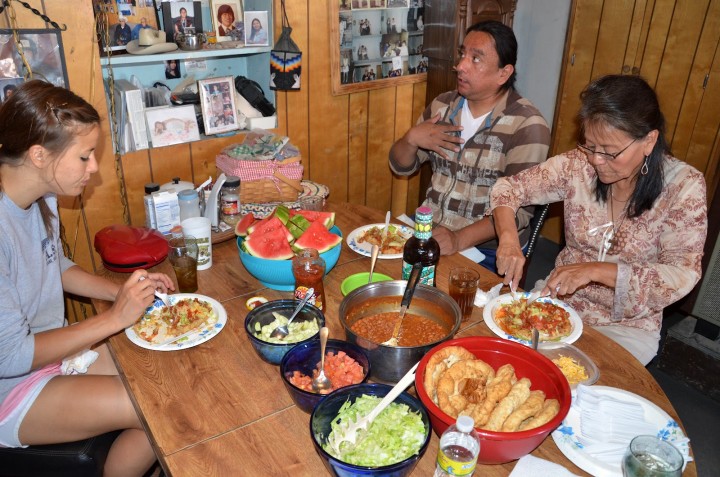
 Agatha Spencer of Chinle, Arizona

Agatha shares her stories about being an academic advisor at the college and the importance of keeping Navajo culture alive in today’s Western society.
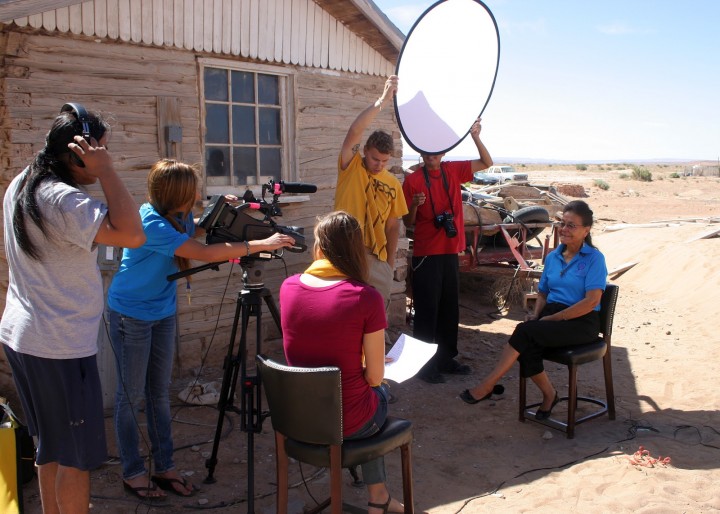
Agatha Spencer of Chinle, Arizona

Project completed by:

Lionel Harvey – DC

Ashleigh Clyde – DC

Elisenda Xifra Reverter – WSU

Laura McCormick- WSU


This documentary film is archived at the Navajo Nation Museum, Navajo Nation Library, Winona State University Library, and Diné College Library, and will be archived at the Smithsonian Institution’s National Museum of the American Indian.

The film is part of the Navajo Oral History project, a multi-year collaboration between the Winona State UniversityMass Communication Department and Diné College– The official Tribal College of the Navajo Nation
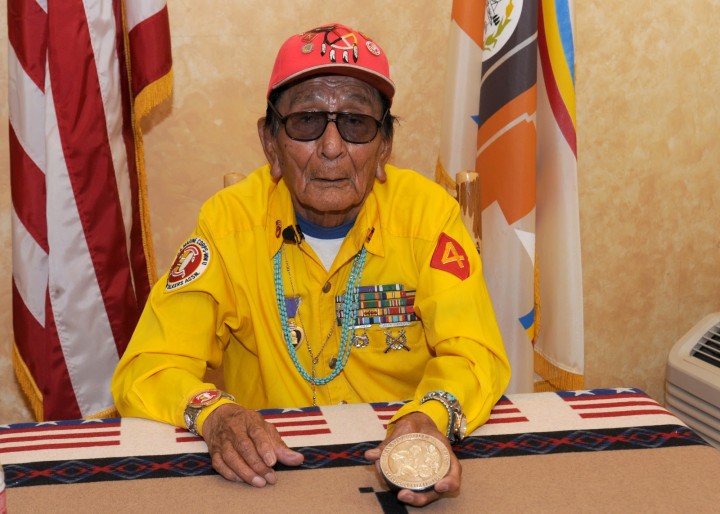
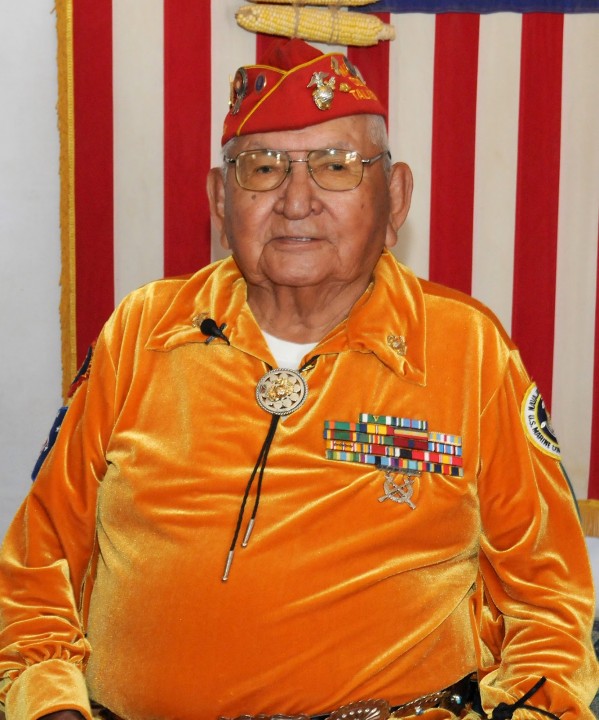
Samuel Tom Holiday – Navajo Code Talker

Living History Samuel Tom Holiday Navajo Code Talker

Samuel Tso Holiday-Silver Medallion

Photo by Tom Grier/Navajo Oral History Project.

Despite being forbidden to speak the Navajo language at boarding schools, Samuel Holiday recognized the importance of his language and culture.

He shares stories of his service in the U.S. Marines during World War II as a testament to this power. As a Navajo Code Talker, he served in the South Pacific, transmitting and receiving messages that were never deciphered by the Japanese.

Samuel Tom Holiday Navajo Code Talker

Photo by Tom Grier/Navajo Oral History Project.

Samuel´s legacy goes beyond his military duty. He is a role model and source of inspiration for Navajo youth.

This documentary film was researched, photographed, edited and produced by students of Winona State University (Winona, Minnesota) and Diné College (Tsaile, Arizona, Navajo Nation) during summer 2012.

It contains stories Samuel Tom Holiday of Kayenta, Arizona, told the students during several hours of interviews about his life.
Samuel Tom Holiday Winona

Project completed by:
Kelsey Curtis – DC
Liam Krause – WSU
Rachel Rivers – WSU
Christine Willie – DC

This documentary film is archived at the Navajo Nation MuseumNavajo Nation LibraryWinona State University Library, and Diné College Library, and will be archived at the Smithsonian Institution’s National Museum of the American Indian.

The film is part of the Navajo Oral History project, a multi-year collaboration between the Winona State UniversityMass Communication Department and Diné College– The official Tribal College of the Navajo Nation

Hubbell Native American Auction May 4, 2013

Navajo Rugs and many other Native American Art and Crafts

Hubble Trading Post auction 2012

Hopi katsina dolls – pottery – carvings – fetishes – Navajo& Hopi baskets – Navajo rugs –
jewelry – concho belts – sash belts – paintings – cradle boards – and many more.

Preview is from 9:00 AM-11:00 AM and the auction will start at 12:00 noon and go until all items are offered to the bidders. Remember that the Navajo Reservation will be on daylight saving time.

Native American food vendors will have available many traditional foods and the tent and park grounds will be occupied with many local traders and Native American vendors offering all types of art and crafts and the Trading Post will be open throughout the day as well as tours of the J.L. Hubbell homestead.

Driving Directions to Ganado & Hubbell Trading Post
The National Historic Site is located within the Navajo Nation in Ganado, Arizona near the intersection of Highways 264 and 191.

Source: Friends of Hubbell Trading Post

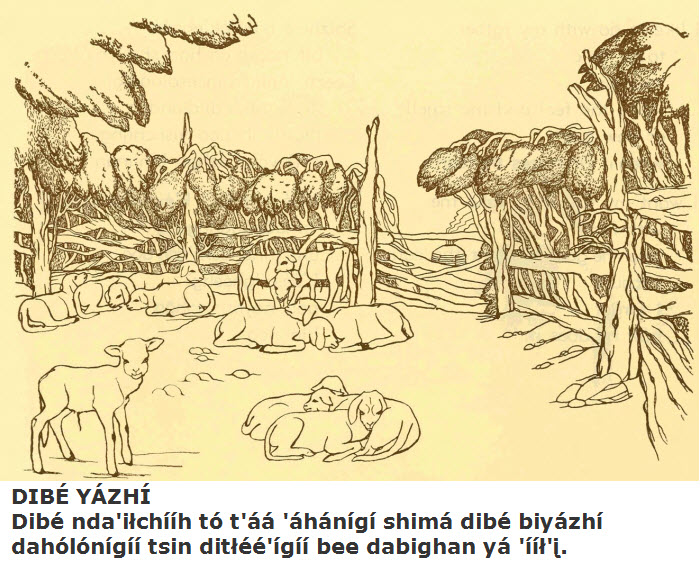
Little Lambs – Navajo Language Lesson

Little Lambs - Navajo Language Lesson


LITTLE LAMBS
The little lambs are born.
Near the waterhole my mother makes shelters of green boughs for the mother sheep.
There in the shelters the l ittle lambs are born.

The green boughs stand close together, they do not let the snow nor the wind nor the sand come in to hurt the lambs.
Soon the lambs will be big enough to play with me.

 Source : “Little Herder in the Spring” by Ann Clark 1940

Illustrated by:
Hoke Denetsosie
Linguistics by:
John P. Harrington
Robert W. Young

More Navajo Language Lessons

Harold Morgan – Navajo Oral History

Harold Morgan – Navajo Tribal Council Liaison

 Living History

Harold Morgan - Navajo Oral History

Photo by Tom Grier/Navajo Oral History Project.

Harold Morgan lives with his family in Sawmill, Arizona. He is a thoughtful and deeply spiritual man who has faithfully served the Navajo Nation for nearly three decades as Legislative Assistant to the Navajo Tribal Council.

Harold Morgan - Bell

Harold Morgan rang the bell 21 times to start the Navajo Council meetings.
Photo by Tom Grier/Navajo Oral History Project.

During this time, Harold has worked under seven Tribal Chairmen or Presidents and helped Navajo Nation governing leaders through periods of transition.

This documentary film was researched, photographed, edited and produced by students of Winona State University (Winona, Minnesota) and Diné College (Tsaile, Arizona, Navajo Nation) during summer 2011.

It contains stories Harold Morgan of Sawmill, Arizona, told the students during several hours of interviews about his life.

Project completed by:
Lionel Harvey – DC
Alyssa Reimers – WSU
Michael Ruka – WSU

This documentary film is archived at the Navajo Nation MuseumNavajo Nation LibraryWinona State University Library, and Diné College Library, and will be archived at the Smithsonian Institution’s National Museum of the American Indian.

The film is part of the Navajo Oral History project, a multi-year collaboration between the Winona State UniversityMass Communication Department and Diné College– The official Tribal College of the Navajo Nation
Field – Navajo Language Lesson

Field - Navajo Language Lesson

THE FIELD
In a little delta of seepage water near the waterhole is a small place that my father has fenced to make a home for the corn, for the squash and the melons.

It is too cold now, but soon, when the snow melts and hides away in the warm sand father will go to his field. There he will make the soil ready for planting.

He will break through the hard crust of winter and turn up toward the sun little lumps of fresh earth.


 Source : “Little Herder in the Spring” by Ann Clark 1940

Illustrated by:
Hoke Denetsosie
Linguistics by:
John P. Harrington
Robert W. Young

More Navajo Language Lessons

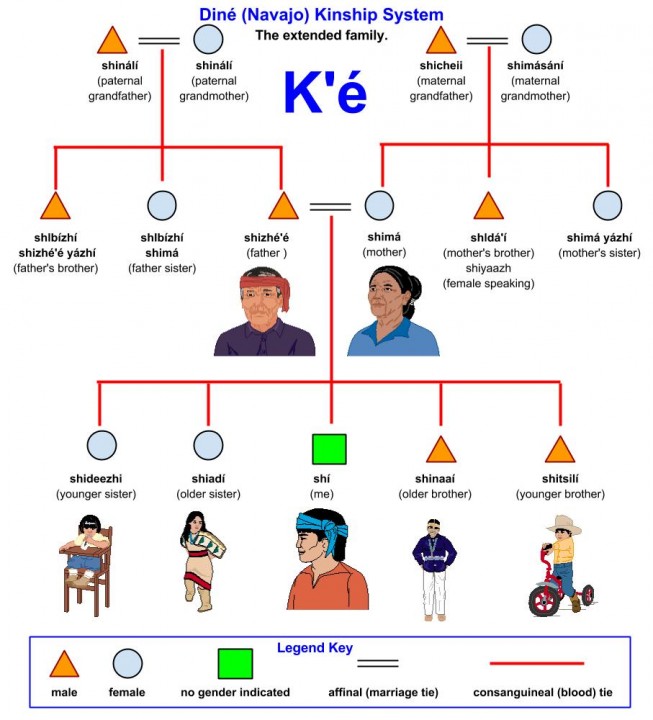
K’é – Diné (Navajo) Kinship System

The Diné society is based primarily upon kinship arising from clan affiliation, as each person is a member of the tribe by reason of his or her affiliation to one of the numerous Clans.

It is very important for a person to know K’e – The Kinship System.
Below are the Diné (Navajo) terms for the extended family:

Diné (Navajo) Kinship System

Graphic: Rough Rock  School Press  | © 2013 | All Rights Reserved

The main attributes of Navajo kinship are:

  • The basic term k’é refers to affective action and solidarity, including such concepts as love, compassion, kindness, friendliness, generosity, and peacefulness.
  • Matrilineal — descent is traced through one’s mother
  • Matrilocal — husbands go to reside among the wife’s family. This means that older females will have substantial authority in the organizing and running of the household and control of the property.

The learning of kinship begins with the family which consists of a man, his wife , and his unmarried children.

Clanship is determined through the mother’s clan, and a child is “born for” the father’s clan.

Clanship also determines marriage, as one should marry into one’s own clan, into one’s father’s clan, or with someone whose father’s clan is the same as your father.

K’é is central to maintaining the Diné language and culture. Diné young people must know their clan relatives to avoid marriage within their own clans.

When the Diné greet each other, it is appropriate for them to introduce themselves by telling their clans.

It is critical that all Diné understand their ancestral history so that they can maintain and respect the clan traditions.

The knowledge of these traditions, passed down through many generations, must continue to be taught and respected. This is crucial for survival of the traditional ways of the Diné people.

Sources:

 K’e Graphic source:
Rough Rock School Press
Phone: 928-728-3788
Fax: 928-728-3502
www.roughrock.k12.az.us

Dine Culture Awareness Handbook, Central Consolidated School District No.22, NM.

Navajo Clan Legends, compiled by Don Mose Jr., SJSD Media Center, Blanding UT. 2001

Navajo Nation 1997 Close Up Program, Darrell Watchman, ed. Navajo Nation Division of Education, 1997.

Franciscans, Saint Michaels, Ariz. An ethnologic dictionary of the Navaho language (Kindle Locations 9337-9341). Saint Michaels, Ariz., Franciscan Fathers.

Joe Vandever – Navajo Code Talker

Navajo Code Talker Joe Vandever

Navajo Oral History Project

Joe Vandever - Navajo Code Talker

Photo by Elisenda Xifra Reverter

Joe Vandever Sr. lives in Haystack, New Mexico. After growing up near Grants, New Mexico, he was recruited into the 297th Platoon of the United States Marine Corps.

Joe Vandever - Navajo Code Talker

Photo by Elisenda Xifra Reverter

Joe was enlisted as a Navajo Code Talker, traveled on 16 different ships and saw action on several South Pacific islands during World War II. Returning from the war, Joe served the Diné people as a medicine man, practicing his spiritual rituals and beliefs that he still holds closely today.

Project completed by:

The project team working on a documentary film about Joe’s life includes Shannon Bolte and Joel Farber from Winona State University, and James McKenzie and Shawn Tsosie, Diné College students.

This documentary film was researched, photographed, edited and produced by students of Winona State University (Winona, Minnesota) and Diné College (Tsaile, Arizona, Navajo Nation) during summer 2012.

It contains stories Joe Vandever Sr. of Haystack, New Mexico, told the students during several hours of interviews about his life.

This documentary film is archived at the Navajo Nation MuseumNavajo Nation LibraryWinona State University Library, and Diné College Library, and will be archived at the Smithsonian Institution’s National Museum of the American Indian.

The film is part of the Navajo Oral History project, a multi-year collaboration between the Winona State UniversityMass Communication Department and Diné College– The official Tribal College of the Navajo Nation


The Waterhole – Navajo Language Lesson

The Waterhole - Navajo Language Lesson


THE WATERHOLE
The waterhole hides away behind the red rocks, but my sheep know where to find it.
Their little feet have made a deep trail from the corral to the waterhole.


How to Start Conversations in the Navajo Language

Video and Text by daybreakwarrior


When people want to learn conversational Navajo, they always want to learn how to say, “How are you doing?” There are ways to say this, namely:

Hait’áo naniná?
Haa lá ánít’é?

You can ask these but they’re not usually conversation starters. These are used if you know the person is not emotionally doing well or physically sick or something.

A better way to begin a conversation is to use the starter, “Áá'” This phrase literally means “open up,” but can also mean like, “tell me about it.” It can be used alone in the right scenario or used in combination with starter questions:

Áá’ ha’íí baa naniná?
What are you doing?

Áá’ ha’íí baa nídinídzá?
What will you be doing?

Áá’ ha’íí baa nisíníyá?
What were you doing?

Áá’ háágóó díníya?
Where are you going?

Áá’ háágóó nisíníyá?
Where did you go?

Áá’ háádé?é?’?
Where are you from?

Áá’ háádé?é?’ísh yínáál?
Where you coming from?

Áá’ ha’íí baa dahane’?
What’s the news?

Áá’ ha’íí daha’ní?
What’s the gossip?

Áá’ ha’íí hodoo’niid?
What was said?

Áá’ ha’íí?
What’s up?

Video and Text by daybreakwarrior