Archives for February 2013

Code Talker Samuel Tso – Navajo Oral History Project

Code Talker Samuel Tso was born on June 22, 1922, at Black Mountain near Many Farms Ariz.

Code Talker Samuel Tso at  Hogan

Photo by Tom Grier/Navajo Oral History Project.

Tso was Zuni Tachiinii and born for Nakai Dine’e.
He enlisting in the USMC in March 1943, Code Talker Tso went through basic training and Navajo Code Talker school.

He served in the USMC 5th Marine Division. He signed on with the Recon Company and was sent to the Pacific Theater. He served in Guadalcanal, Bougainville, Pelelui, Guam, and Okinawa.

He was discharged as a Private First Class and was awarded the Asiatic Pacific Campaign Medal, the Victory Medal of World War II, the USMC Good Conduct Medal and the National Defense Service Medal.

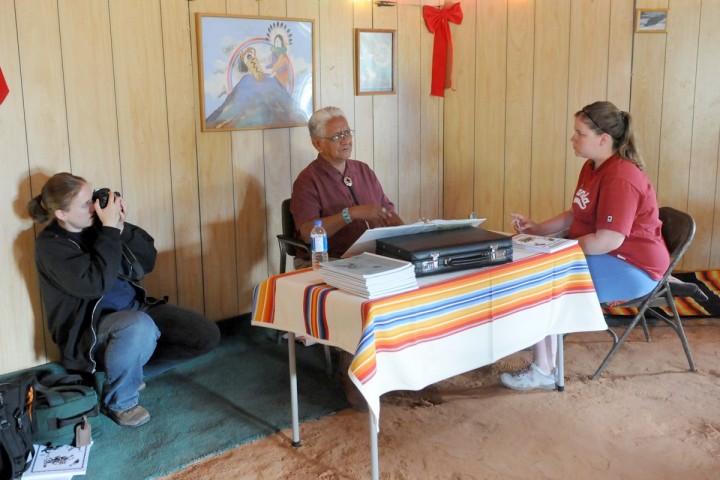
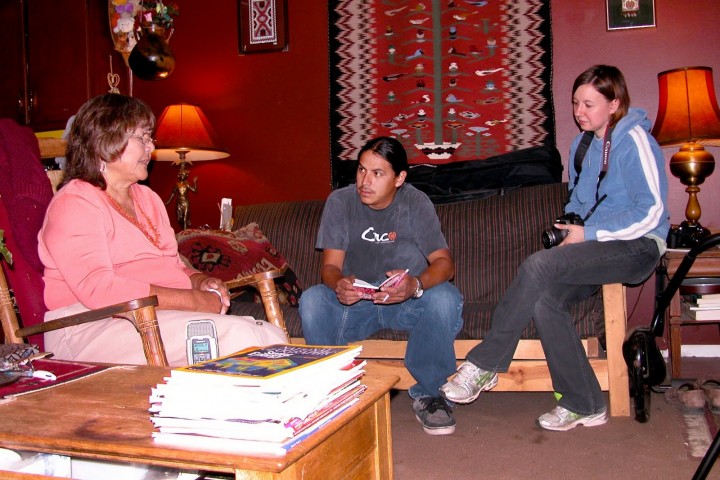
Code Talker Samuel Tso - camera

Photo by Tom Grier/Navajo Oral History Project.


After his March 1946 discharge, Code Talker Tso continued his education earning a Bachelor of Arts in Education from Utah State University in Logan, Utah.

As a teacher and then as a teacher supervisor, Code Talker Tso worked there thirty years.
Code Talker Tso remained active in education, serving as a school board member for
Many Farms High School in Many Farms, Arizona.
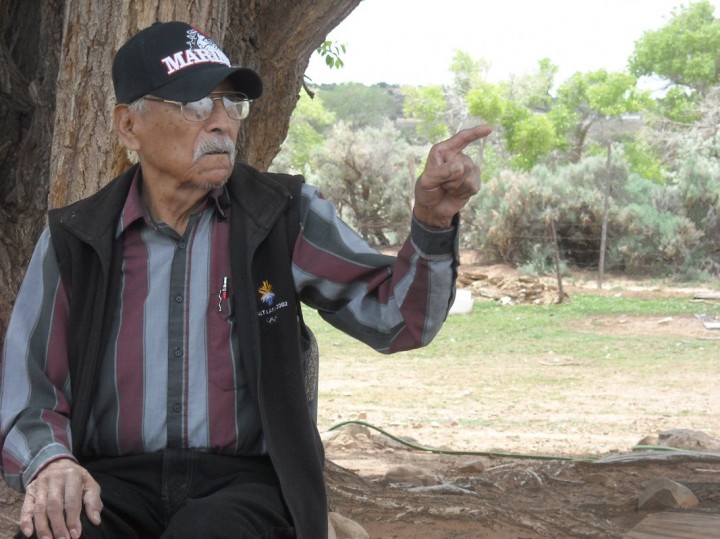
Code Talker Samuel Tso at home

Photo by Tom Grier/Navajo Oral History Project.

Code Talker Tso traveled throughout most of the U.S. conducting presentations about the
Navajo Code Talkers and about his life experiences before and after the war.

He holds several relevant documents about the Navajo Code Talkers and contributed to the Back to the Battlefields documentary. Code Talker Tso was a member of the Marine Corp League and Veterans of Foreign Wars Post 1677.

Code Talker Tso was also a leader in the Navajo Code Talkers Association and the
Navajo Code Talkers Foundation.

Samuel Tso passed away at age 89 on May 9 2012 at San Juan Regional Medical Center in Farmington, N.M.

Source: The Navajo Nation Government


This documentary film was researched, photographed, edited and produced by students of Winona State University (Winona, Minnesota) and Diné College (Tsaile, Arizona, Navajo Nation) during summer 2009.

It contains stories Harry Walters of Cove, Arizona, told the students during several hours of interviews about his life.

This documentary film is archived at the Navajo Nation MuseumNavajo Nation LibraryWinona State University Library, and Diné College Library, and will be archived at the Smithsonian Institution’s National Museum of the American Indian.

The film is part of the Navajo Oral History project, a multi-year collaboration between the Winona State UniversityMass Communication Department and Diné College– The official Tribal College of the Navajo Nation


Navajo People Website Links:

Navajo Culture – Navajo History – Navajo Art – Navajo Clothing Navajo Pictures – Navajo Rugs – Navajo Language– Navajo Jewelry – Navajo Code Talker – Navajo Pottery – Navajo Legends – Hogan’s – Sand Painting – Navajo Food – Navajo News – Navajo Nation
 

Coyote Tales – Coyote And Rabbit

*Please remember that the telling of Coyote Stories is restricted to the winter storytelling months, October through February.

Coyote And Rabbit-1


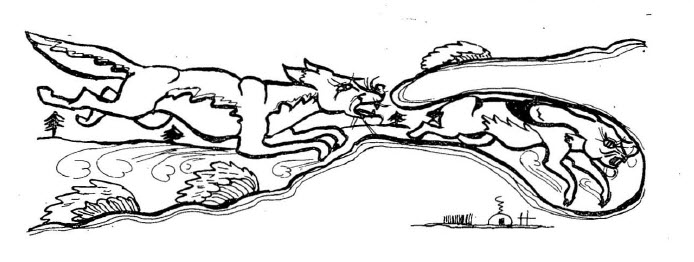
COYOTE AND RABBIT
One day ‘ Coyote was out walking.
He was walking in the forest.
He saw Rabbit.
He started to chase Rabbit.
Rabbit ran in a hole.
Coyote said,
” I’ll get you out of that hole,
Let me think,”.
Coyote sat down to think.
Now I know: I’ll get you out.
I’ ll get weeds.
I’ll put them in the hole.
I’ll set fire to them.
Then you will come out,” said Coyote


Coyote And Rabbit-2

Rabbit laughed.
No, I will not come out my cousin .
I like weeds. I’ ll eat the weeds.”
“Do you eat milkweeds ” asked Coyote.
I’ll get milkweeds.”
.
“Yes, I like milkweeds.
I’ll eat the milkweeds,” said Rabbit.
” Do you eat foxtail gross”asked Coyote .
” I’ll get foxtail gross
“Yes, I like foxtail gross”.
I’ll eat the foxtail gross,” said Rabbit.
“Do you eat rabbit brush” asked Coyote.
“I’ll get rabbit brush,” I like rabbit brush best of all.
I’ll eat the rabbit brush too, said Rabbit.
. “I know,” said Coyote. “Pinyon pitch. ”
Rabbit looked sad. Coyote And Rabbit-3

” You will kill me. I do not eat pinyon pitch,” said Rabbit .
Coyote was happy.
He ran from pinyon tree to pinyon tree .
He gathered pinyon pitch . .
He put the pinyon pitch in the hole .
He set the . pinyon pitch on fire.
He bent low. He blew on the fire.
” Come closer,” said Rabbit .
“Blow harder.”
Coyote come closer.
He blew harder. Coyote And Rabbit-4


“I’m nearly dead,” said Rabbit ..
“Came closer’

Blow a little harder'”
Coyote come closer.
He blew harder.

He shut his eyes.
He blew harder.
Rabbit turned.
He kicked hard .
The fire flew in Coyote’s’ face .
Rabbit ran away.
He was laughing very hard.

Going To The Sing – Navajo Language Lesson

Going To The Sing  - Navajo Language Lesson

GOING TO THE SING
My father goes for dry wood.
He has to go to the foothills to get it.
My mother cooks bread and meat.
sit by the door in the sunshine and think about the Sing.

Source : “Little Herder in the Winter” by Ann Clark 1940
Illustrated by:

Hoke Denetsosie
Linguistics by:
John P. Harrington
Robert W. Young

More Navajo Language Lessons


Navajo People Website Links:
Navajo Culture – Navajo History – Navajo Art – Navajo Clothing Navajo Pictures – Navajo Rugs – Navajo Language– Navajo Jewelry – Navajo Code Talker – Navajo Pottery – Navajo Legends – Hogan’s – Sand Painting – Navajo Food – Navajo News – Navajo Nation

Southwest Indian Art Fair 2013

The 20th annual Southwest Indian Art Fair, and Market

Date and Times:
Saturday February 23 from 10:00 a.m.–5:00 p.m.
Sunday February 24 from 10:00 a.m.–4:00 p.m.

Southwest Indian Art Fair 2013

Location:
Front lawn of Arizona State Museum on the University of Arizona campus in Tucson, Arizona.

Meet 200+ Native artists, many of them award winning.
Talk with them about their work and learn about the cultural significance that informs, inspires, and imbues their work.

Top-quality, handmade art includes pottery, Hopi katsina dolls, paintings, jewelry, baskets, Navajo Rugs, blankets, and much more. Artist demonstrations, Native food, music, and dance performances round out the two-day celebration.

Features:

  • Artist Demonstrations
  • Music and Dance Performances
  • Silent Auction—hosted by the Friends of the ASM Collections—of a wide range of Native collectibles
  • Friends of Hubbell Live Auction
  • Raffle of objects donated by the artists

About the Southwest Indian Art Fair: 

The Southwest Indian Art Fair began in 1993 as a small pottery fair. Since then, it has grown to be the highlight of Arizona State Museum’s annual educational and cultural celebrations, as well as a highly anticipated feature of Tucson’s winter festival calendar. SWIAF, like all the museum’s events, promotes respect for and understanding of the region’s vibrant and diverse Native cultures. Your support of this event helps us support Native artists. We thank you!

Source of information:
Arizona State Museum

Website:
http://www.statemuseum.arizona.edu/events/swiaf/

Beulah Allen, Navajo Medical Doctor, First Miss Navajo

 Navajo Oral History project – Dr. Beulah Allen

Navajo Medical Doctor and the First Miss Navajo Nation

Beulah Allen, Navajo Medical Doctor, First Miss Navajo

Photo by Tom Grier/Navajo Oral History Project.

Beulah Allen, one of the first Navajo medical doctors, and the person who helped create the Emergency Medical Service providing ambulance and quick response medical care across the Navajo Nation.

She was the first Miss Navajo was Dr. Beulah Melvin Allen, in 1952. She was crowned at the Navajo Nation Fair, the largest fair held on the Navajo Nation, which had been established three years earlier.

Hometown: Kinlichee, Arizona
Education:
Rehoboth High School, 1989
B.S. in Accounting/Finance – University of Arizona

Clans:
She is Born to(Nishlí): Bitter Water People (Tódích’íi’nii)
Born for (Báshíshchíín): Red Running Into The Water People (Táchii’nii)
Maternal Grandparents are (Dashichei): Start Of The Red Streaked People (Deeshchii’nii)
Paternal Grandparents are (Dashinálí): One-Walk-Around People (Honágháahnii)

Miss Navajo 1952-DrBeulahMelvinAllenMD

Photo courtesy of Miss Navajo Council

This film contains stories Beulah Allen of Wheatfields, Arizona, told the students during several hours of interviews about her life.


This documentary film was researched, photographed, edited and produced by students of Winona State University (Winona, Minnesota) and Diné College (Tsaile, Arizona, Navajo Nation) during summer 2009.

It contains stories Harry Walters of Cove, Arizona, told the students during several hours of interviews about his life.

This documentary film is archived at the Navajo Nation MuseumNavajo Nation LibraryWinona State University Library, and Diné College Library, and will be archived at the Smithsonian Institution’s National Museum of the American Indian.

The film is part of the Navajo Oral History project, a multi-year collaboration between the Winona State UniversityMass Communication Department and Diné College– The official Tribal College of the Navajo Nation


Navajo People Website Links:

Navajo Culture – Navajo History – Navajo Art – Navajo Clothing Navajo Pictures – Navajo Rugs – Navajo Language– Navajo Jewelry – Navajo Code Talker – Navajo Pottery – Navajo Legends – Hogan’s – Sand Painting – Navajo Food – Navajo News – Navajo Nation


Navajo Shepherdess Girls in Winter

Navajo Shepherdess Girls in Winter

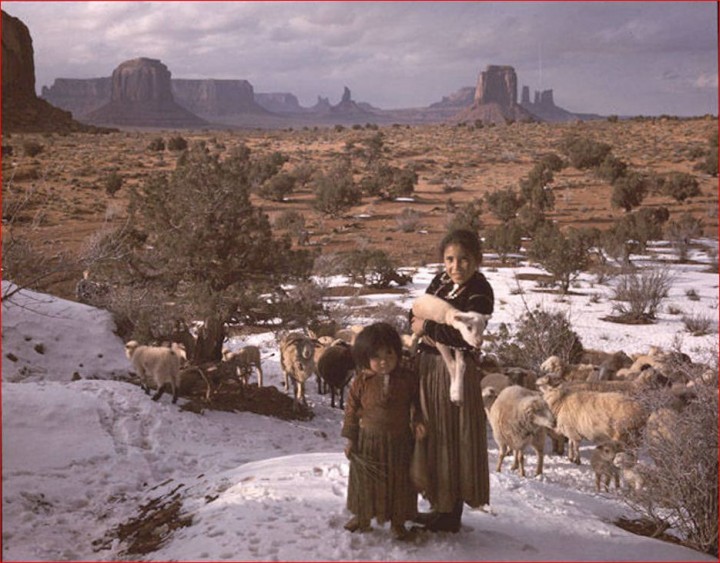
Title: Shepherdess in Winter. In Monument Valley, Arizona on the Navajo Indian Reservation, children tend the flocks whatever the weather. Here a young girl holds her pet lamb, and in the background loom the stone monuments for which the area is named. [photographer’s caption]

Date: 1950-1970
Creator: Muench, Josef
Photo’s courtesy of:  Northern Arizona University. Cline Library.
Subjects: Navajo Indians, Native Americans
Places: Monument Valley (Ariz. and Utah) Navajo Indian Reservation

New Navajo Photo Gallery


Navajo People Website Links:
Navajo Culture – Navajo History – Navajo Art – Navajo Clothing Navajo Pictures – Navajo Rugs – Navajo Language– Navajo Jewelry – Navajo Code Talker – Navajo Pottery – Navajo Legends – Hogan’s – Sand Painting – Navajo Food – Navajo News – Navajo Nation
 

Sleep – Navajo Language Lesson

Sleep - Navajo Language Lesson


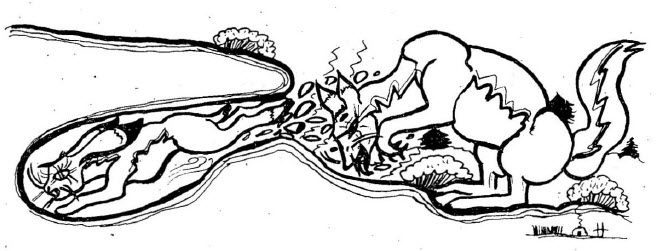
SLEEP
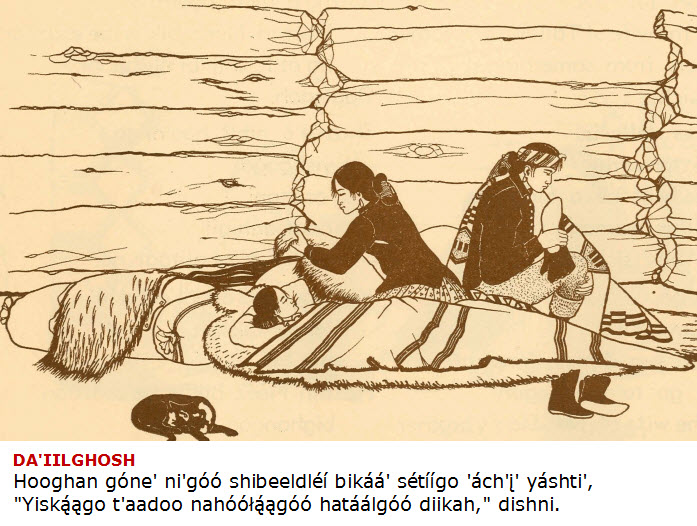
Lying on my blanket bed on the floor of the hogan,I say to myself
over and over, “If the sun shines tomorrow we will go to the Sing.”


Source : “Little Herder in the Winter” by Ann Clark 1940
Illustrated by:

Hoke Denetsosie
Linguistics by:
John P. Harrington
Robert W. Young

More Navajo Language Lessons


Navajo People Website Links:
Navajo Culture – Navajo History – Navajo Art – Navajo Clothing Navajo Pictures – Navajo Rugs – Navajo Language– Navajo Jewelry – Navajo Code Talker – Navajo Pottery – Navajo Legends – Hogan’s – Sand Painting – Navajo Food – Navajo News – Navajo Nation

Dr. WIlson Aronilth Jr. Navajo Teacher

 Navajo Oral History Project – Photos and Video 2009


Dr. WIlson Aronilth Jr. Navajo Teacher

Photo by Tom Grier/Navajo Oral History Project.

“Forever will I teach”

By Jessica Larsen

WHEATFIELD, Ariz. — He took his first step into the room. There was no turning back.

With one more step he was met with eyes – 24 pairs of them.

This was it, his first classroom.

No curriculum, no books, no idea what to teach.

The futures these students rested on the shoulders of a man who never once considered teaching.

His name is Wilson Aronilth Jr. He was born on the Navajo Reservation in 1933 in the back of a Model-T truck. Aronilth never thought he would become one of the most respected teachers at Dine College and one of the key designers of the school curriculum.

To get there, Aronilth had to become a student himself.

Dr. WIlson Aronilth Jr. Navajo Teacher 2

Photo by Tom Grier/Navajo Oral History Project.

Aronilth was born for his maternal grandmother the Red House Clan, and for his paternal grandmother, Zuni Red Streak Running into the Water Clan, for his maternal grandfather, Near the Water clan, and for his paternal grandfather, the Under the Sleeve clan.

Education had always been important to Aronilth; he learned that through his mother. When he was born, his mother decided the best way to provide for her son was by getting a higher education for herself. She gave her son to his grandmother when he was five days old. His grandmother taught him all he needed to know about manhood, being Navajo and marriage.
He and his wife have been married for 54 years through an arranged marriage. Together they had four children – Veronica, Lawrence, Cynthia, Pat and adopted son Louie – 14 grand-children and seven great-grandchildren.

“We made a lot of adjustments, that’s why I say my life wasn’t jolly and sweet and lovable all the way,” Aronilth said. “I feel like if you were to evaluate my marriage from my perspective, about 98 percent of my married life was enjoyable and good. We practically raised one another because we got married at a young age. I was 22 years old, she was only about 18.”

Being Navajo meant Aronilth and his family had to make sacrifices – and he knew it. Living on the reservation meant forfeiting the chance for a better education because of the little availability. Students were giving up knowledge by choosing to stay where their heritage was versus going off the reservation for school. Aronilth wanted to change that, all he needed was the opportunity.

Aronilth clearly remembers the day he was asked to teach at Dine College, it was 1969 – a day that changed his life forever.

Ned Hatathi, a college official, asked Aronilth to teach Navajo culture to the students at the college.

“I don’t know anything about teaching as far as classroom involvement,” Aronilth said.

“No, I’m not asking if you went to school to be an educator,” Hatathi said. “I think you are an educator in your own way. So teach Navajo culture, knowledge and history the way you were taught.”

And Aronilth did.
Feature layout by Winona State University students Jessica Larsen and Kim Streblow
His grandmother told him self-clan introduction is very important. You never know who you are related to, she would say.
So Aronilth started with that.

“Probably the most important thing that I learned in his class was how to properly introduce myself in Navajo with my clans,” said Miranda Haskie, former student of Aronilth and current colleague at Dine College. “And from that moment…every time that I met anyone, I introduced myself to them.”

On Haskie’s first day class, she learned Aronilth was her grandfather by clan.
Now that Aronilth had taught his students the most important lesson, clan introduction, he needed to go deeper into Navajo teachings. He needed books – something the school did not have.

So Aronilth took matters into his own hands. He wrote six books, three of which are still used in classes today. His first, “Foundations of a Navajo Culture,” was to teach the students where they came from and who they are. Also, “Navajo Philosophy” and “Navajo Holistic Healing,” to go deeper into teachings that have been taught for years.

All of his books were written based on teachings that were passed down from his ancestors. That is the Navajo way.
He received a very small profit from his books, but he never cared about the money. It was his passion for Navajo culture that he wanted to spread and this was the only way he knew how.

Aronilth believes in the younger generations. He knows they are the future and he wants that future to be a promising one.
That is why he took the job. For some of these students, few believed they could make it to college. And Aronilth couldn’t let them quit.

“You’re my generation, you’re my children, you’re my future leaders, and you are my flesh and blood,” he would say to them. “I’m here to try and do what I can to support you and to give a little advice or guidance in your life in the way of education. I think you’re unique, special and intelligent.”

Dr. WIlson Aronilth Jr. Navajo Teacher 3

Photo by Tom Grier/Navajo Oral History Project.

Aronilth is credited with building a majority of the Dine College curriculum. At 76, Aronilth is still teaching and writing books. Although he is retired, Aronilth plans to stay at the college until he can no longer teach. His mission is to share the knowledge he has, while he knows it is only one perspective in a world of many.

“My knowledge is smaller than a mustard seed,” he said. “I don’t know everything.”

Aronilth’s humble, Navajo up-bringing is what his family and friends know him most for.

“He’s the real McCoy,” Louie Barton said, Aronilth’s adopted son. “He’s the genuine…a Dine, a Navajo. He has come a long ways, up to the point where you can say he’s a man, he’s a warrior.”

..End


This documentary film was researched, photographed, edited and produced by students of Winona State University (Winona, Minnesota) and Diné College (Tsaile, Arizona, Navajo Nation) during summer 2009.

It contains stories Harry Walters of Cove, Arizona, told the students during several hours of interviews about his life.

This documentary film is archived at the Navajo Nation MuseumNavajo Nation LibraryWinona State University Library, and Diné College Library, and will be archived at the Smithsonian Institution’s National Museum of the American Indian.

The film is part of the Navajo Oral History project, a multi-year collaboration between the Winona State UniversityMass Communication Department and Diné College– The official Tribal College of the Navajo Nation


Navajo People Website Links:

Navajo Culture – Navajo History – Navajo Art – Navajo Clothing Navajo Pictures – Navajo Rugs – Navajo Language– Navajo Jewelry – Navajo Code Talker – Navajo Pottery – Navajo Legends – Hogan’s – Sand Painting – Navajo Food – Navajo News – Navajo Nation


Supper – Navajo Language Lesson

Supper  - Navajo Language Lesson

SUPPER

Now we ore eating the good food. We eat slowly.
We eat a long time. The hunger I pain is gone.
It went somewhere, but I ‘do not know when it left so quickly.

Source : “Little Herder in the Winter” by Ann Clark 1940
Illustrated by:

Hoke Denetsosie
Linguistics by:
John P. Harrington
Robert W. Young

More Navajo Language Lessons


Navajo People Website Links:
Navajo Culture – Navajo History – Navajo Art – Navajo Clothing Navajo Pictures – Navajo Rugs – Navajo Language– Navajo Jewelry – Navajo Code Talker – Navajo Pottery – Navajo Legends – Hogan’s – Sand Painting – Navajo Food – Navajo News – Navajo Nation
Preparing food and distributing beef at the Squaw Dance

Preparing food and distributing beef at the Squaw Dance, Monument Valley, 1938-Charles Kelly.
Description:
Preparing food and distributing beef at the Squaw Dance 1938.

Location: Navajo Indian Reservation, Monument Valley
Photographer: Kelly, Charles
Date of photograph: 1938
Subject: Navajo Life, Food; Meat; Beef; Monument Valley; Navajo Indians; Dance
Photo courtesy of: Utah State Historical Society. All Rights Reserved.
Photo Number: No. 14463
Source donors: Kelly, Charles

More Navajo Photos


Navajo People Website Links:
Navajo Culture – Navajo History – Navajo Art – Navajo Clothing Navajo Pictures – Navajo Rugs – Navajo Language– Navajo Jewelry – Navajo Code Talker – Navajo Pottery – Navajo Legends – Hogan’s – Sand Painting – Navajo Food – Navajo News – Navajo Nation