The Spanish and the Navajo

History of the Spanish and the Navajo

The first account in history of the Spaniards arrival in the Southwest dates back to 1540 when Coronado and his expedition came in search of gold and riches. Unsuccessful, they returned to Spain empty handed.
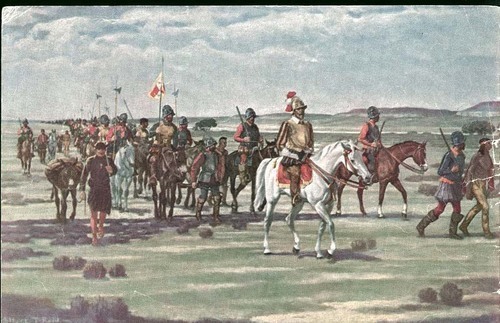
coronado_expedition

The Spaniards succeeding visit to the Southwest had other intentions. They wanted to resettle, indoctrinate and civilize the Indians by converting them to Catholicism. Through their efforts they wanted to teach the Indians a better way of life.

The Spaniards did, indeed, meet one objective. They took the best farm lands and resettled in Indian territory. Their second objective failed. Although Missions were established and Indians did attend services, they were not converted to Catholicism. The third objective was met to an extent. The Indians absorbed the Spanish culture and. used it to their,advantage, but they did not let the Spaniards influence their beliefs and philosophy of life.

Spanish and the Navajo

When the Spaniards arrived in the Southwest, they brought with them domestic animals such as cows, horses, and sheep. They also brought with them guns and tools, which were all new to the Indians.

The presence and depredations of the Spaniards were to totally change the world of the Navajos. Within ten years after the arrival of the Spanish colonists in 1598 the Navajos had obtained sheep, cattle and horses from pueblo Indians who escaped from the Spaniards, taking the cattle, horses and sheep they were tending with them, and sought refuge among the Navajos.

The first impression the Indian had of the Spaniards was ‘that they were Gods.
Later, their impression changed dramatically when the Spaniards settled on their best farm lands and left their families homeless, and used Indians as slaves and servants. Those who served as slaves learned many of the Spani~h ways.
They learned how to build’ adobe homes using molds . They learned to grind wheat to make bread, as well as how to ride horses and care for domestic animals. At the same time the Spaniards learned from the Indians. They were introduced to foods made from corn and corn meal.

This went on for many years and the Indians grew weary. They resented the Spanish invaders. They wanted them out of their territory. They no longer wanted any part of them. So in 1680, all the Indian tribes acted together to drive the Spaniards out; and this they did.

After 1700 the Spanish found the Navajo to be an ever growing scourge because of their raids and alliances. The tribe always managed to be at peace with some tribes, while it fought and raided others. They feared only the Utes, who had learned war in the Plains area. Once the Plains tribes acquired the horse, they developed Indian warfare into an art. The annual efforts of the Spanish to break up alliances and outwit the Navajo are reported in the letters of the Spanish governor de Anza, 1777-87. (Thomas, 1932). These efforts were fruitlessly continued until, in 1846, the United States relieved the Spanish of the Southwest and their Navajo problem.

By the end of the 1700’s the Navajos had drifted farther west into the Canyon de Chelly area. New settlements were established. By 1776, the region lying between the Rio Grande Pueblos and the Hopi village was known to the Spaniards as “Providence of the Navajos” and a new way of life for the Navajos began.

By this time, the Navajos had acquired thousands of sheep and horses they were more mobile and they could farm to a greater extent and their tribe was growing in number.

In 1800, Antonio Pinto died. He was a Navajo leader who was Instrumental to some extent in keeping the peace between the Spaniards and Navajo. After his death the Navajos relied heavily on raiding the villages of New Mexico for sheep and horses. The Spaniards raided for the purpose of acquiring captives as laborers and household, servants, and by this time hundreds of Navajo women and children were living in Spanish homes as servants.

Hostilities grew deeper and deeper and the Navajos rebelled by not only raiding the Spanish settlements, but other Indian tribe settlements as well. The other Indian tribes appealed to the Spaniards for help and in 1818 a treaty was signed by one band of Navajos·whom the Spaniards had defeated once before.

The Treaty failed because once again there was no one leader for all the Navajo clans. Raiding continued for several more years. The Navajo way of life was greatly influenced by the Spaniards during this period.

Navajos remained free from all military, political, and ecclesiastical control. They continued to acquire items of Spanish material culture through their systematic harassment of the settled Spanish and Pueblo villages but their social and political organization remained unchanged.

More about Navajo History:
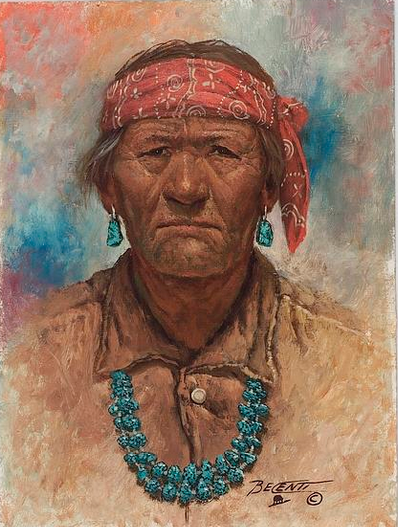
 

Antonio el Pinto Chief of the Navajos

Chief of the Navajos from 1783 – 1793

Antonio el Pinto Hashke’ likízhí (Speckled Warrior)

By  Robert Becenti 1978  Diné (Navajo)

By Robert Becenti 1978 Diné (Navajo) 
Courtesy of National Museum of the American Indian

On August 24, 1777, the Viceroy of New Spain appointed Anza as the Governor of the Province of Nuevo México, the present day U.S. state of New Mexico.

Governor de Anza led a punitive expedition against the groups of Native Americans, who had been repeatedly raiding Taos.

Governor de Anza in a new ploy to help control the Navajos , selected a chief whom the Spanish had named Antonio el Pinto (apparently because of his “speckled complexion), gave him the title of “general,” and paid him to keep other Navajos from raiding the Spanish settlements. The new “general” was given silver medals, several saddles, roles of cloth and sacks of food, which he no doubt enjoyed to the fullest. But he had no influence whatsoever over the other Navajo war chiefs and their bands of professional raiders, so the raids continued.

1785 June 25 – It was reported that after June 25, 1785, the Navajos made two more campaigns (against the Gila Apaches) and sent 14 leaders to Santa Fe, … One, the very famous Antonio (el Pinto), had been the mainspring of the Navajos reluctance to declare war upon the Gilas. But he now sought the Governor’s pardon and promised future devotion, and on the next expedition against the Gilas, to be made in August, to assist with as many Navajos as possible.

To recompense Antonio el Pinto and his volunteers, de Anza agreed to furnish each one of the auxiliaries who presented himself an almud (about 6 bushels) of pinole, mounts to carry them, and two head of cattle for the total of them, because Antonio had indicated to him (de Anza) that without this aid they could not subsist the length of time required on our expeditions.  De Anza requested of the Comandante General Jose Antonio Rengel that four canes with silver points be sent him with an equal number of medals as insignia … ” for Antonio el Pinto and the other three chiefs who had accompanied him to Santa Fe.

July 15 & 17 – Fourteen Navajos, including four captains, came to see Governor de Anza and offered to continue making war on the Gila Apaches. On July 27, a captain and six Navajo warriors from the rancheria of Guadalupe north of Mt. Taylor made the same offer.
It was reported to de Anza that ” … although these Indians (Navajos) know well the advantage of having us (Spaniards) as friends and the ruin which would come to them by obliging us to declare war upon them, this does not yet save from them fear of the Gilas and the repugnance they feel in sacrificing to our friendship the ancient ties of kinship and alliance which they have maintained with them.

In this opinion, Captain Antonio (el Pinto) fortifies and assures them because he is the one who has been most opposed to the Spaniards and has made himself respected among the others because of his great riches, and large number of relatives and partisans.

De Anza was instructed to continue his efforts to dissolve the Navajo-Gila Apache alliance, and to aid him the Comandante General stated that he was sending a number of horses and mules and 200 firearms with corresponding munitions for the equipment of the militia, settlers and Navajos who attend the campaigns. He further advised de Anza to insure the friendship of the Utes ” … so that by no means may they permit the said enemies (Navajos) to approach or take refuge in their territories … ”

1786
June 8 – Navajo “General” Don Carlos and his Lt. Don Jose Antonio, the interpreter, and seven others arrived in Santa Fe. Don Carlos reported that ” … he had visited all the rancherias of his dependency, where he was received and recognized with universal applause; … ”

The interpreter who had been placed among the Navajos by de Anza reported that the tribe consisted of 700 families of four or five persons each and that there were five divisions, San Mateo, Cebolleta, Canon, Chuska, and de Chelly; that there were 1000 warriors possessed of 500 horses, and Navajo possessions also consisted of 600 mares with young, 700 black ewes, and forty cows with bulls and calves.

Don Carlos lamented a recent epidemic which he attributed to lack of trade with New Mexico which the Governor had closed to them. He also reported that Antonio el Pinto had been deposed as Chief of the Navajos ”

The Comandante General authorized a payment of 200 pesos annually to “General” Don Carlos, Navajo Chief ” … elected with the consent of all the nation … ” and approved by Governor de Anza, and of 100 pesos annually to his Navajo Lieutenant, Don Jose Antonio, to secure their fidelity to the Spaniards and their continued break of alliance with the Gila Apaches.

Ugarte also proposed that the Navajos ” … organize themselves into formal settlements or Pueblos and devote themselves to cultivating the soil in order to induce them to abandon their wandering way of life.”

Regarding the Navajo Chief, Antonio el Pinto, Ugarte wrote de Anza: “If previous facts justify this concept, your lordship will search for the most secure and prudent means of destroying this individual or exiling him from his country without which the complete pacification of this (Navajo) nation will never be secured.”

1787
September – A number of Navajos accompanied a Spanish expedition against the Gila Apaches. Other Navajos made a raid on Abiquiu.
October – A small party of Navajos raided the Rio Abajo. Also, Antonio el Pinto and some of his tribesmen went to Isleta to trade. He was seized by the Alcalde and taken to Santa Fe, where he was held pending orders from the Commanding General of the Provincias Internas. The head chief of the Navajo, as well as many others of the tribe, hastened to Santa Fe to plead with the Governor, Fernando de la Concha, for his release

In April of 1788, Antonio was freed, for Governor Concha had become convinced of his innocence and of his value as a friend and ally to the Spanish cause. The old Navajo headman had been imprisoned twice under the same charge.

1788
Jan 14 – Governor Don Fernando de la Concha, who succeeded de Anza,
April 12 – After Antonio el Pinto was released from imprisonment on April 4, 1788, Governor Concha ordered Vizente Troncoso, one of his officers, and an escort of four soldiers, to accompany the well-known Chief to his ranchería and to verify his arrival there. On his return Troncoso made a lengthy report to the Governor on his observations of the customs and behavior of the Navajos. He wrote: “… we soon arrived at the houses which, five in number, are situated on a plain that is formed in the slope of the mountain (the San Mateo Mountains west of the Rio Puerco), so that it is necessary to climb by a very steep hill. As soon as reached the top Antonio’s parents and brothers (and sisters?) came out to receive me … He (Antonio) had them bring in his stock, killed the largest sheep and offered as much as I and the soldiers might want. All the rest of the morning all the headmen and residents of the nearby

Nov 12 – Governor Concha reported to Ugarte, Señor Comandante-General de Provincias Internas, the “… excellent footing wich we find ourselves at present with the Navajos …” which promised permanent peace between the Navajos and the Spaniards. He also reported how, under the Navajo Chief Antonio el Pinto, the tribe had constructed ten rock towers or fortifications within their encampments to safeguard their women and children from the continuous invasions by the Gila Apaches. He also recommended that the Navajos be established in permanent villages. Governor Concha concluded finally that Antonio el Pinto should be given the title of “General”.

1793
Oct 26 – Antonio el Pinto, Head War Chief of the Navajos, died at his hogan near Guadalupe, New Mexico, of wounds received from a Gila Apache raiding party which he and other Navajos had pursued into the San Mateo Mountains. After killing two of the enemy, he had been shot in the right shoulder by an Apache arrow. After his death, a Navajo war party accompanied by Ute and Jemez allies, set out to avenge the old Chief’s death.


Navajo Vocabulary Flashcards

Use these flashcards to learn the Navajo Language.

Navajo Vocabulary Flashcards

The basic set consists of 150 colorful, index-sized cards; Navajo text on one side and English reference on the opposite side. Basic vocabulary set includes the following categories: animals, food, plants, seasons, family, household items, shapes, numbers and more!

Cards are printed on heavy cardstock.

Illustrations by Theresa Breznau.

Basic Vocabulary set

Set of 150 cards
$10.00 on heavy cardstock
$20.00 Laminated

Ordering Information

San Juan School District
Heritage Language Resource Center
28 West 200 North
Phone: 435-678-1230
FAX: 435-678-1283
Store Hours: 9:00 – 4:30
Monday through Thursday
Email: rstoneman@sjsd.org

Online order at this Website: media.sjsd.org

We accept purchase orders, credit cards, and checks.
We bill only for items shipped and actual cost of shipping.
Personal orders ship after payment is received.
Please estimate 10% of purchase total for shipping cost.


Navajo Hero Twins Story Part 5

Hero Twins Video Part 5

Navajo Language Lesson by Clayton Long

Learn why some monsters were allowed to live included Hunger, Poverty, Old Age, and Cold.


Hero Twins Presentation

From the book:  The Legend of the Navajo Hero Twins

by Don Mose, Jr.
Illustrated by Charles Yanito

Navajo Language Lesson links

Clayton Long – Instructor
Clayton Long YouTube Channel
Mana Academy
Navajo Language Lessons Page
Navajo Language Lessons YouTube Channel
Navajo People Language Page
Heritage Language Resource Center
Harold Carey Jr – Computer Teacher

Navajo Hero Twins Story Part 3

Hero Twins Video Part 3

Navajo Language Lesson by Clayton Long

Navajo Hero Twins Part 3 Presentation

From the book:  The Legend of the Navajo Hero Twins

by Don Mose, Jr.
Illustrated by Charles Yanito

Navajo Language Lesson links

Clayton Long – Instructor

Clayton Long YouTube Channel

Mana Academy

Navajo Language Lessons Page

Navajo Language Lessons YouTube Channel

Navajo People Language Page

Heritage Language Resource Center

Harold Carey Jr – Computer Teacher

Jake Livingston – Navajo-Zuni Silversmith

Jake Livingston Living History Video

This documentary film was researched, photographed, edited and produced by students of Winona State University (Winona, Minnesota) and Diné College (Tsaile, Arizona, Navajo Nation) during summer 2013. It contains stories Jake Livingston of Sanders, Arizona, told the students during several hours of interviews about his life.

This documentary film is archived at the Navajo Nation Museum, Navajo Nation Library, Winona State University Library, and Diné College Library, and will be archived at the Smithsonian Institution’s National Museum of the American Indian.

The film is part of the Navajo Oral History project, a multi-year collaboration between the Winona State University Mass Communication Department and Diné College – The official Tribal College of the Navajo Nation

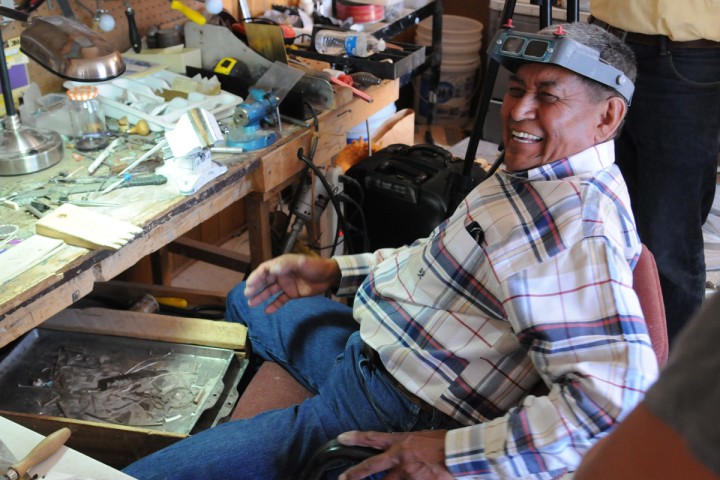
Jake Livingston - Navajo-Zuni Silversmith

Photo by Tom Grier /Navajo Oral History Project.

Jake Livingston was born in 1945. He is of Navajo/Zuni descent, and grew up in Pine Haven New Mexico. He graduated from Window Rock High School and then joined the Marine Corp. in 1966.

He served in the Vietnam War and was wounded 3 times and spent 2 months in the hospital. After the war he served a  policeman before becoming a silversmith.

Jake Livingston in Workshop
Photo by Tom Grier /Navajo Oral History Project.

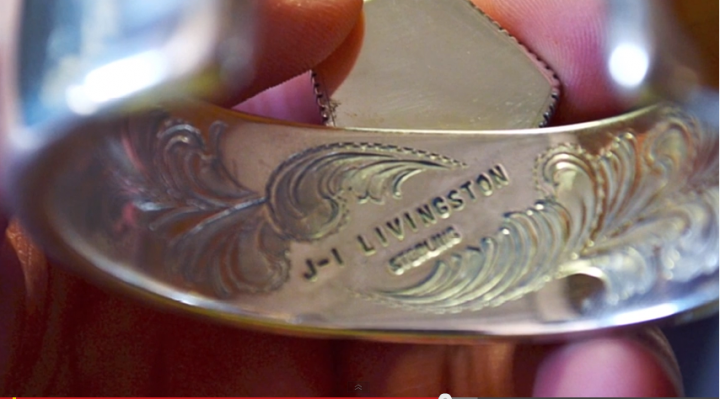
He learnt his skills from watching his father Jacob Haloo. Under his father’s tutelage and encouragement Jake became a master jeweler. He has been actively making jewelry since the early 1970’s and was named the Indian Arts & Crafts Association’s Artist of the Year in 1988. Jake Livingston draws inspiration from his Zuni Pueblo Heritage.

Jake Livingston stamp

His awards include numerous 1st place and Best of Division’s at the Santa Fe Indian Market. His work has been showcased in a number of books including the Jacka’s, Navajo Jewelry A Legacy of Silver and Stone.

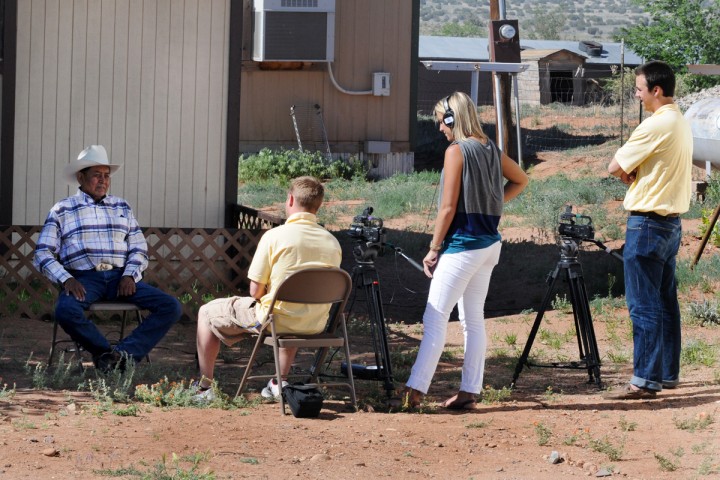
Jake Livingston Interview

 Photo by Tom Grier /Navajo Oral History Project.

Navajo Constellation Winter Stories

 The posters offer an excellent way to illustrate Winter Stories.

Constellation Rabbit Tracts

Navajo Constellation Poster Set

The Constellation set includes 10 illustrated posters, each 11″ x 17″ printed on heavy cardstock.

Constellation Poster set

They can also be used with the book, “Coyote Tosses the Stars,” as well as “The String Book.” Original illustrations were created by Theresa Breznau. Each illustration is accompanied by a description written in both Navajo and English languages.

Set of 10 – 11” x 17”
$15.00

Ordering Information

San Juan School District
Heritage Language Resource Center
28 West 200 North
Phone: 435-678-1230
FAX: 435-678-1283
Store Hours: 9:00 – 4:30
Monday through Thursday
Email: rstoneman@sjsd.org

Online order at this Website: media.sjsd.org

We accept purchase orders, credit cards, and checks.
We bill only for items shipped and actual cost of shipping.
Personal orders ship after payment is received.
Please estimate 10% of purchase total for shipping cost.

Navajo Consonant Poster

Help for learning the  Navajo Language

Diné Bizaad

Navajo Consonant Poster

This colorfully-illustrated poster is a concise reference for the classroom. Laminated poster measures approximately 18″ x 22″ and is printed on heavy card-stock.

This poster is a companion to the Navajo Vowel poster.

Illustrations were created by Theresa Breznau.

Two sizes are available:

17″ x 22″ $6.00

11″ x 14″. $2.00

Ordering Information

San Juan School District
Heritage Language Resource Center
28 West 200 North
Phone: 435-678-1230
FAX: 435-678-1283
Store Hours: 9:00 – 4:30
Monday through Thursday
Email: rstoneman@sjsd.org

Online order at this Website: media.sjsd.org

Click here for New Fall 2014  Catalog

We accept purchase orders, credit cards, and checks.
We bill only for items shipped and actual cost of shipping.
Personal orders ship after payment is received.
Please estimate 10% of purchase total for shipping cost.

Navajo-Churro Wool Show & Clinic

Navajo-Churro Sheep Wool Show & Clinic General Information

Navajo-Churro Sheep Wool Show

Show Time is Friday, June 22nd 2013 – 10:00 AM to 1:00 PM

This year we are using a different approach to the Navajo Churro Wool show. Rather than competing against each other, we will be learning with each other. Everyone will be a winner because each will be gaining valuable insights as a producer and breeder of Navajo-Churro Sheep. First, you will be asked to tell us what you like about your wool fleece and what you are concerned about as a wool producer or fiber artist. Then the judge(s) will provide you with their opinion(s) from these perspectives:

  1. How well your fleece compares to the Navajo Churro Sheep Association breed standard

  2. The quality of your fleece from a Navajo fiber artist perspective

  3. Comments about other characteristics of the wool and its potential uses

Wool producers, judges and the audience will dialog about the pros and cons of the fleece being shown. Considering the logic that there is no such thing as a “bad” fleece, what is the best use for the fleece being presented? Should you keep breeding for this kind of wool or cull the animal that produced it? If someone were to purchase this fleece from you what would you tell them about it? If not suitable for spinning and weaving, what other uses could there be for the fleece?

We will also discuss how to skirt and store a fleece, value added uses, how to price and sell wool, the difference between the commodity market and a specialty market for wool and related topics.

You will receive a score card on your fleece with a small ribbon attached. Blue = outstanding, red = excellent, yellow = desirable or white = undesirable as a Navajo Churro fleece. The purpose of this approach is to improve our collective knowledge as producers and breeders of Navajo Churro Sheep and as fiber artists. We will gain a deeper understanding about how to handle the wool we produce while learning from each other in a friendly atmosphere.

You will have a few minutes to discuss what you see as the pros and cons of the fleece you are showing. The judges will examine the fleece and discuss what they see as the pros and cons of each. The audience will have a few minutes to ask questions as time allows. We will divide fleeces into these categories.

  • Mature ram fleece – white and colored;

  • Mature ewe fleece – white and colored;

  • Lamb – ram hogget and Lamb – ewe hogget (Hogget = First Shearing from Lamb)

We will show by class of fleece and will show as many fleeces as we have time for. The judges may adjust the classes as they determine necessary.

There is no fee for participation in the show, however if you can afford to make a donation to help DBI cover costs of this event, we would appreciate it.

You may pre-register or register at 9:00 AM on Friday the 21st.

2013 Navajo-Churro Sheep Show & Clinic Registration Form

Mail registration forms to:

Cindy Dvergsten

P.O. Box 218

Lewis CO, 81327 or bring to show.

Contact Cindy at wnc@gobrainstorm.net or call 970-739-2445 for information and questions.

Source: http://www.navajolifeway.org/


Sheep Is Life Celebration Events

Friday & Saturday June 21-22, 9 a.m. – 9 p.m.

Sheep Is Life Celebration Events

Most activities are on the southeast side of the Hatathli Cultural Center, Diné College, Tsailé Campus, Navajo Nation

Free events for the whole family!

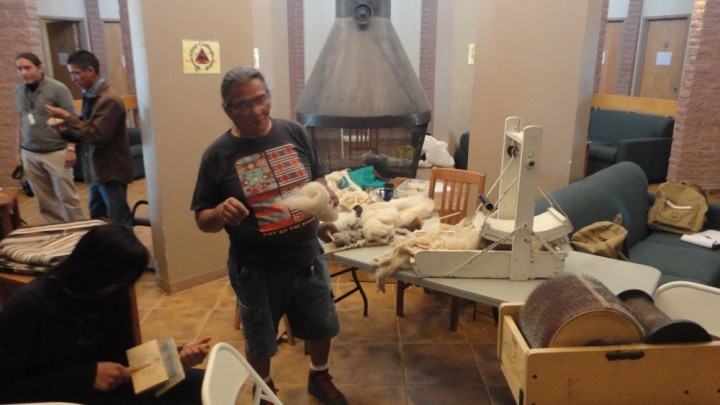
Sheep to Loom Activities, Felting, Storytelling, Exhibits Diné Agriculture, Diné Foods, Sheep and Wool Clinics

Vendors Welcome!

Navajo Weaving Sale, Sheep is Life General Store, Sheep Camp, and Awards Ceremony

Do not miss an opportunity to experience Navajo culture and arts first hand.

click here to download schedule


Navajo-Churro Wool Show & Clinic

Navajo-Churro Sheep Wool Show & Clinic General Information

Show Time is Friday, June 22nd 2013 – 10:00 AM to 1:00 PM

This year we are using a different approach to the Navajo Churro Wool show. Rather than competing against each other, we will be learning with each other. Everyone will be a winner because each will be gaining valuable insights as a producer and breeder of Navajo-Churro Sheep. First, you will be asked to tell us what you like about your wool fleece and what you are concerned about as a wool producer or fiber artist. Then the judge(s) will provide you with their opinion(s) from these perspectives:

  1. How well your fleece compares to the Navajo Churro Sheep Association breed standard

  2. The quality of your fleece from a Navajo fiber artist perspective

  3. Comments about other characteristics of the wool and its potential uses


Navajo-Churro Sheep Show & Clinic

Navajo-Churro Sheep Show & Clinic General Information

Show Time is Saturday, June 22nd 2013 – 9:00 AM to 1:00 PM

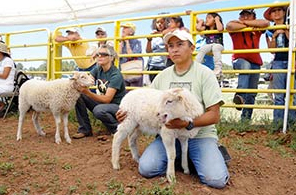
Kirt Atakai, right, and Robbin Robinson, of Grand Falls, Ariz., hold their lambs in the sheep show during the Sheep is Life Celebration June 25 at Diné College in Tsaile, Ariz. Atakai and his lamb won best of show in the lamb category. (Navajo Times photo – Leigh T. Jimmie)

This year we are using a different approach to the Navajo-Churro Sheep show. Rather than competing against each other, we will be learning with each other. Everyone will be a winner because each will be gaining valuable insights as a producer and breeder of Navajo-Churro Sheep. First, you will be asked to tell us what you like about your sheep and what you are concerned about as a breeder. Then the judge(s) will provide you with their observations(s) from these perspectives:

  1. How well your sheep compares to the Navajo Churro Sheep Association breed standard

  2. The health and soundness of your sheep as breeding stock

  3. Comments about other characteristics, Navajo perspectives, and concerns

More Information:

http://www.navajolifeway.org/

TahNibaa Naataanii, Executive Director
info@navajolifeway.org
(505) 406-7428